
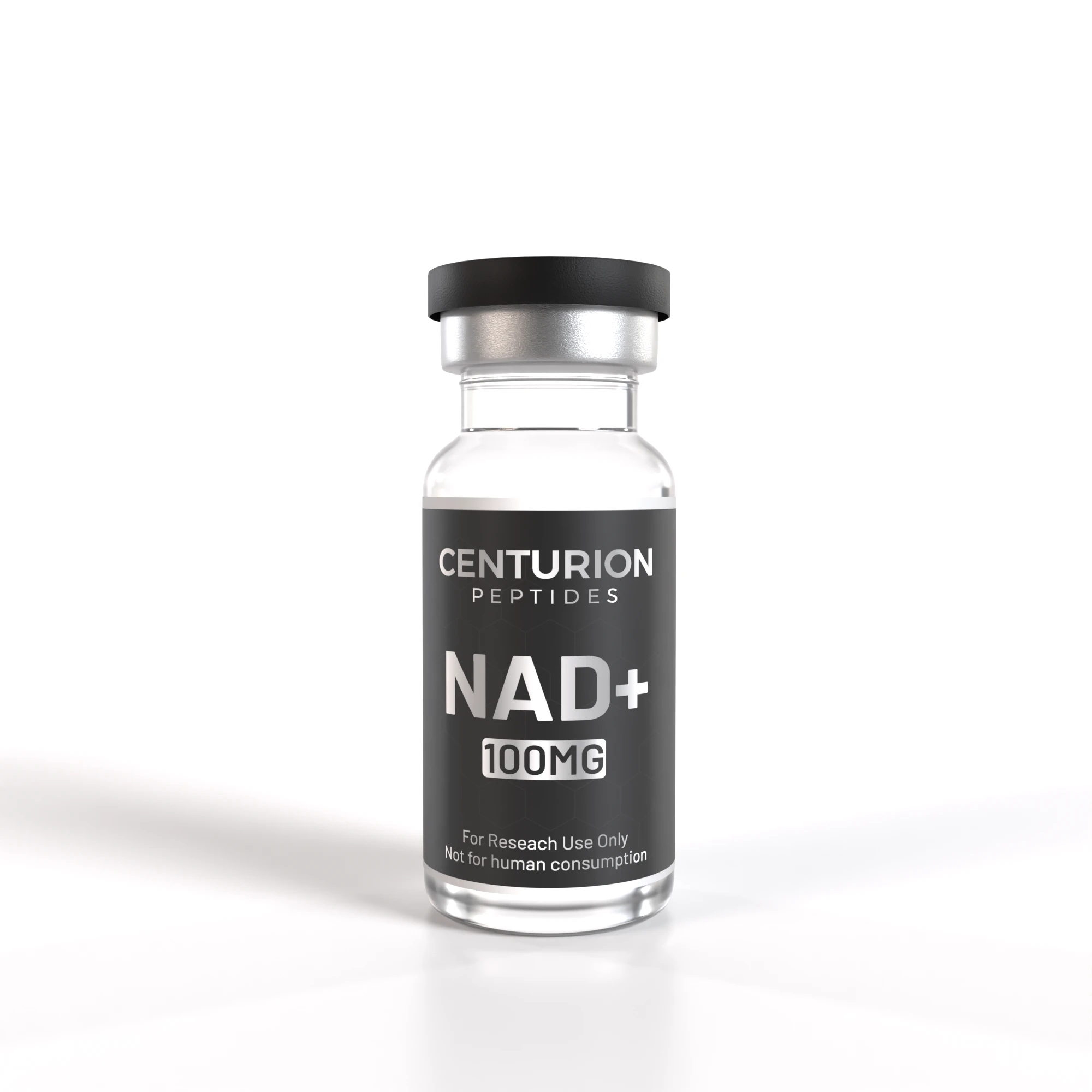
NAD+ 100MG
Categories:
$50.00
FDA Disclaimer: The statements made within this website have not been evaluated by the US Food and Drug Administration. The statements and the products of this company are not intended to diagnose, treat, cure or prevent any disease. All products are for laboratory developmental research USE ONLY.
Guaranteed Safe Checkout
Money Back
Guarantee
SATISFACTION
GUARANTEED
EASY
RETURNS
SECURE
ORDERING
RAPID
SHIPPING
THIRD PARTY
TESTED
NAD+
NAD+ (Nicotinamide Adenine Dinucleotide) is a critical coenzyme present in all living cells that plays a central role in cellular metabolism, energy production, and overall cellular health. It is essential for redox reactions, acting as a key electron carrier in metabolic pathways such as glycolysis, the citric acid cycle, and oxidative phosphorylation. NAD+ levels naturally decline with age, which has been associated with reduced cellular function, mitochondrial dysfunction, and age-related decline in tissue repair.
Overview
NAD+ is involved in a wide range of biological processes, including energy metabolism, DNA repair, gene expression regulation, and cellular signaling. Research indicates that maintaining optimal NAD+ levels may support mitochondrial health, promote healthy aging, and improve cellular resilience. NAD+ is also a substrate for enzymes such as sirtuins and PARPs, which are involved in epigenetic regulation, stress response, and DNA repair.
- Supports cellular energy production and metabolism
- Plays a key role in DNA repair and genomic stability
- Acts as a cofactor for sirtuins, influencing longevity pathways
- Research suggests potential benefits in aging, neurodegeneration, and metabolic health
Specifications
- Chemical Name: Nicotinamide Adenine Dinucleotide
- Molecular Formula: C21H27N7O14P2
- Molecular Weight: 663.43 g/mol
- Other Names: NAD+, β-NAD+, Coenzyme I
Research and Clinical Insights
Cellular Metabolism and Energy Production
NAD+ is essential for redox reactions in energy metabolism, transferring electrons from metabolic intermediates to the electron transport chain. Optimal NAD+ levels are critical for efficient ATP production and overall cellular energy balance. Declining NAD+ levels are linked to mitochondrial dysfunction, which may contribute to age-related fatigue, decreased exercise performance, and metabolic dysregulation.
DNA Repair and Genomic Stability
NAD+ serves as a substrate for poly(ADP-ribose) polymerases (PARPs), enzymes involved in detecting and repairing DNA damage. Adequate NAD+ levels support genomic integrity and may reduce the accumulation of age-related DNA damage, potentially influencing longevity and cellular health.
Sirtuin Activation and Aging Pathways
Sirtuins are NAD+-dependent enzymes that regulate gene expression, stress resistance, and mitochondrial function. By maintaining NAD+ availability, sirtuin activity is supported, which is associated with improved metabolic function, cellular repair, and potentially lifespan extension in experimental models.
Neuroprotective and Cognitive Effects
Preclinical studies suggest that NAD+ may support brain health by maintaining neuronal energy metabolism, enhancing mitochondrial function, and protecting against oxidative stress. These effects have been investigated in models of neurodegenerative diseases and age-related cognitive decline.
Usage Considerations
NAD+ is primarily used for research and laboratory purposes. While supplementation strategies are being studied in clinical research, NAD+ is not approved for therapeutic use outside controlled studies. Laboratory handling and safety protocols should be strictly followed.
Note: NAD+ is available for research purposes only. Please review and adhere to all applicable Terms and Conditions before ordering.
NAD+
NAD+ (Nicotinamide Adenine Dinucleotide) is a critical coenzyme present in all living cells that plays a central role in cellular metabolism, energy production, and overall cellular health. It is essential for redox reactions, acting as a key electron carrier in metabolic pathways such as glycolysis, the citric acid cycle, and oxidative phosphorylation. NAD+ levels naturally decline with age, which has been associated with reduced cellular function, mitochondrial dysfunction, and age-related decline in tissue repair.
Overview
NAD+ is involved in a wide range of biological processes, including energy metabolism, DNA repair, gene expression regulation, and cellular signaling. Research indicates that maintaining optimal NAD+ levels may support mitochondrial health, promote healthy aging, and improve cellular resilience. NAD+ is also a substrate for enzymes such as sirtuins and PARPs, which are involved in epigenetic regulation, stress response, and DNA repair.
- Supports cellular energy production and metabolism
- Plays a key role in DNA repair and genomic stability
- Acts as a cofactor for sirtuins, influencing longevity pathways
- Research suggests potential benefits in aging, neurodegeneration, and metabolic health
Specifications
- Chemical Name: Nicotinamide Adenine Dinucleotide
- Molecular Formula: C21H27N7O14P2
- Molecular Weight: 663.43 g/mol
- Other Names: NAD+, β-NAD+, Coenzyme I
Research and Clinical Insights
Cellular Metabolism and Energy Production
NAD+ is essential for redox reactions in energy metabolism, transferring electrons from metabolic intermediates to the electron transport chain. Optimal NAD+ levels are critical for efficient ATP production and overall cellular energy balance. Declining NAD+ levels are linked to mitochondrial dysfunction, which may contribute to age-related fatigue, decreased exercise performance, and metabolic dysregulation.
DNA Repair and Genomic Stability
NAD+ serves as a substrate for poly(ADP-ribose) polymerases (PARPs), enzymes involved in detecting and repairing DNA damage. Adequate NAD+ levels support genomic integrity and may reduce the accumulation of age-related DNA damage, potentially influencing longevity and cellular health.
Sirtuin Activation and Aging Pathways
Sirtuins are NAD+-dependent enzymes that regulate gene expression, stress resistance, and mitochondrial function. By maintaining NAD+ availability, sirtuin activity is supported, which is associated with improved metabolic function, cellular repair, and potentially lifespan extension in experimental models.
Neuroprotective and Cognitive Effects
Preclinical studies suggest that NAD+ may support brain health by maintaining neuronal energy metabolism, enhancing mitochondrial function, and protecting against oxidative stress. These effects have been investigated in models of neurodegenerative diseases and age-related cognitive decline.
Usage Considerations
NAD+ is primarily used for research and laboratory purposes. While supplementation strategies are being studied in clinical research, NAD+ is not approved for therapeutic use outside controlled studies. Laboratory handling and safety protocols should be strictly followed.
Note: NAD+ is available for research purposes only. Please review and adhere to all applicable Terms and Conditions before ordering.
Related Products
-
CARGRILINTIDE
Peptides $20.00 – $40.00Price range: $20.00 through $40.00 This product has multiple variants. The options may be chosen on the product page
Reviews
There are no reviews yet.