
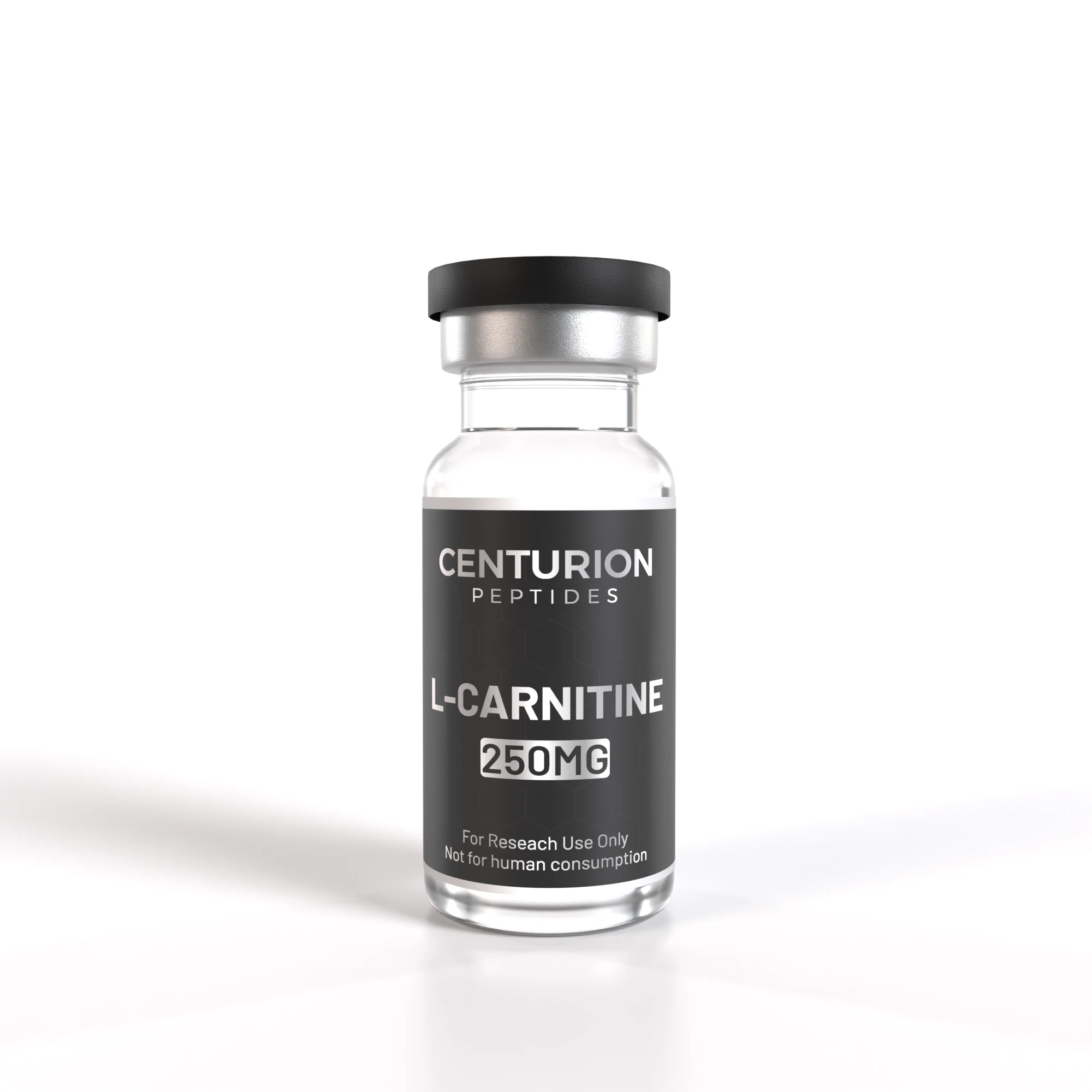
L-CARNITINE 250MG
Categories:
$50.00
FDA Disclaimer: The statements made within this website have not been evaluated by the US Food and Drug Administration. The statements and the products of this company are not intended to diagnose, treat, cure or prevent any disease. All products are for laboratory developmental research USE ONLY.
Guaranteed Safe Checkout
Money Back
Guarantee
SATISFACTION
GUARANTEED
EASY
RETURNS
SECURE
ORDERING
RAPID
SHIPPING
THIRD PARTY
TESTED
L-Carnitine
L-Carnitine is a naturally occurring quaternary amine compound that plays a central role in cellular energy metabolism. It is essential for the transport of long-chain fatty acids across the inner mitochondrial membrane, where these fatty acids undergo β-oxidation to generate adenosine triphosphate (ATP). Due to this critical function, L-Carnitine has been extensively studied in metabolic, cardiovascular, neurological, and exercise physiology research.
L-Carnitine is biosynthesized in the liver and kidneys from the amino acids lysine and methionine, with additional dietary sources including red meat, fish, poultry, and dairy products. In research models, L-Carnitine is frequently evaluated for its regulatory influence on lipid metabolism, mitochondrial efficiency, oxidative stress balance, and cellular energy homeostasis.
Overview
The primary physiological function of L-Carnitine is the facilitation of fatty acid transport into mitochondria, enabling the conversion of lipids into usable cellular energy. By controlling the rate of fatty acid oxidation, L-Carnitine directly influences metabolic flexibility, energy production, and lipid homeostasis.
Beyond its metabolic role, L-Carnitine has demonstrated involvement in regulating oxidative stress, supporting mitochondrial biogenesis, maintaining cellular membrane integrity, and modulating inflammatory signaling pathways. These multifaceted functions make L-Carnitine a prominent subject of investigation in research related to metabolic disorders, cardiovascular disease, neurodegeneration, physical performance, and aging.
- Facilitates mitochondrial fatty acid transport and β-oxidation
- Enhances cellular ATP production and metabolic efficiency
- Supports lipid metabolism and body fat utilization
- Regulates oxidative stress and mitochondrial health
- Investigated in metabolic, cardiovascular, neurological, and exercise physiology research
Specifications
- Molecular Formula: C7H15NO3
- Molecular Weight: 161.20 g/mol
- Chemical Name: 3-Hydroxy-4-(trimethylammonio)butanoate
- Other Names: Levocarnitine, Vitamin BT
Research and Clinical Insights
L-Carnitine and Fatty Acid Oxidation
Extensive research demonstrates that L-Carnitine serves as a critical cofactor in the transport of long-chain fatty acids from the cytosol into the mitochondrial matrix. This transport process occurs via the carnitine shuttle system, which includes carnitine palmitoyltransferase I (CPT-1), carnitine-acylcarnitine translocase, and carnitine palmitoyltransferase II (CPT-2). By regulating this transport mechanism, L-Carnitine directly controls the rate of fatty acid oxidation and overall energy production.
Metabolic Health and Weight Regulation
Research models investigating obesity and metabolic syndrome have shown that L-Carnitine supplementation may improve lipid utilization, reduce intracellular lipid accumulation, and enhance insulin sensitivity. These effects are attributed to improved mitochondrial fatty acid flux and reduced lipotoxic stress within metabolic tissues.
Mitochondrial Function and Oxidative Stress
L-Carnitine has been shown to stabilize mitochondrial membranes, preserve electron transport chain efficiency, and reduce the production of reactive oxygen species (ROS). By improving mitochondrial integrity and reducing oxidative burden, L-Carnitine contributes to cellular resilience and metabolic longevity.
Neurological and Cognitive Research
In neurological research models, L-Carnitine and its acetylated derivative (Acetyl-L-Carnitine) have demonstrated neuroprotective effects through enhanced mitochondrial energy production, improved neuronal membrane stability, and modulation of neurotransmitter activity. These properties have positioned L-Carnitine as a molecule of interest in studies related to cognitive decline, neurodegenerative disorders, and central nervous system energy metabolism.
Cardiovascular and Exercise Physiology Studies
L-Carnitine is actively investigated in cardiovascular research due to its ability to improve myocardial energy metabolism, enhance fatty acid oxidation in cardiac tissue, and reduce ischemic damage in experimental models. In exercise physiology research, L-Carnitine has been shown to improve physical performance, delay fatigue onset, and accelerate post-exercise recovery by optimizing substrate utilization and reducing metabolic byproduct accumulation.
Cellular Protection and Anti-Inflammatory Signaling
Beyond metabolic regulation, L-Carnitine participates in the modulation of inflammatory signaling pathways and apoptotic mechanisms. Research indicates that L-Carnitine may suppress pro-inflammatory cytokine production while enhancing cellular survival pathways, thereby contributing to tissue protection and systemic metabolic balance.
Usage Considerations
L-Carnitine is supplied strictly for research and laboratory use. It is not approved for human therapeutic application. Researchers must adhere to institutional handling protocols, safety standards, and applicable regulatory guidelines when working with this compound.
Notice: L-Carnitine is offered for research purposes only. Please review and comply with all Terms and Conditions prior to ordering.
L-Carnitine
L-Carnitine is a naturally occurring quaternary amine compound that plays a central role in cellular energy metabolism. It is essential for the transport of long-chain fatty acids across the inner mitochondrial membrane, where these fatty acids undergo β-oxidation to generate adenosine triphosphate (ATP). Due to this critical function, L-Carnitine has been extensively studied in metabolic, cardiovascular, neurological, and exercise physiology research.
L-Carnitine is biosynthesized in the liver and kidneys from the amino acids lysine and methionine, with additional dietary sources including red meat, fish, poultry, and dairy products. In research models, L-Carnitine is frequently evaluated for its regulatory influence on lipid metabolism, mitochondrial efficiency, oxidative stress balance, and cellular energy homeostasis.
Overview
The primary physiological function of L-Carnitine is the facilitation of fatty acid transport into mitochondria, enabling the conversion of lipids into usable cellular energy. By controlling the rate of fatty acid oxidation, L-Carnitine directly influences metabolic flexibility, energy production, and lipid homeostasis.
Beyond its metabolic role, L-Carnitine has demonstrated involvement in regulating oxidative stress, supporting mitochondrial biogenesis, maintaining cellular membrane integrity, and modulating inflammatory signaling pathways. These multifaceted functions make L-Carnitine a prominent subject of investigation in research related to metabolic disorders, cardiovascular disease, neurodegeneration, physical performance, and aging.
- Facilitates mitochondrial fatty acid transport and β-oxidation
- Enhances cellular ATP production and metabolic efficiency
- Supports lipid metabolism and body fat utilization
- Regulates oxidative stress and mitochondrial health
- Investigated in metabolic, cardiovascular, neurological, and exercise physiology research
Specifications
- Molecular Formula: C7H15NO3
- Molecular Weight: 161.20 g/mol
- Chemical Name: 3-Hydroxy-4-(trimethylammonio)butanoate
- Other Names: Levocarnitine, Vitamin BT
Research and Clinical Insights
L-Carnitine and Fatty Acid Oxidation
Extensive research demonstrates that L-Carnitine serves as a critical cofactor in the transport of long-chain fatty acids from the cytosol into the mitochondrial matrix. This transport process occurs via the carnitine shuttle system, which includes carnitine palmitoyltransferase I (CPT-1), carnitine-acylcarnitine translocase, and carnitine palmitoyltransferase II (CPT-2). By regulating this transport mechanism, L-Carnitine directly controls the rate of fatty acid oxidation and overall energy production.
Metabolic Health and Weight Regulation
Research models investigating obesity and metabolic syndrome have shown that L-Carnitine supplementation may improve lipid utilization, reduce intracellular lipid accumulation, and enhance insulin sensitivity. These effects are attributed to improved mitochondrial fatty acid flux and reduced lipotoxic stress within metabolic tissues.
Mitochondrial Function and Oxidative Stress
L-Carnitine has been shown to stabilize mitochondrial membranes, preserve electron transport chain efficiency, and reduce the production of reactive oxygen species (ROS). By improving mitochondrial integrity and reducing oxidative burden, L-Carnitine contributes to cellular resilience and metabolic longevity.
Neurological and Cognitive Research
In neurological research models, L-Carnitine and its acetylated derivative (Acetyl-L-Carnitine) have demonstrated neuroprotective effects through enhanced mitochondrial energy production, improved neuronal membrane stability, and modulation of neurotransmitter activity. These properties have positioned L-Carnitine as a molecule of interest in studies related to cognitive decline, neurodegenerative disorders, and central nervous system energy metabolism.
Cardiovascular and Exercise Physiology Studies
L-Carnitine is actively investigated in cardiovascular research due to its ability to improve myocardial energy metabolism, enhance fatty acid oxidation in cardiac tissue, and reduce ischemic damage in experimental models. In exercise physiology research, L-Carnitine has been shown to improve physical performance, delay fatigue onset, and accelerate post-exercise recovery by optimizing substrate utilization and reducing metabolic byproduct accumulation.
Cellular Protection and Anti-Inflammatory Signaling
Beyond metabolic regulation, L-Carnitine participates in the modulation of inflammatory signaling pathways and apoptotic mechanisms. Research indicates that L-Carnitine may suppress pro-inflammatory cytokine production while enhancing cellular survival pathways, thereby contributing to tissue protection and systemic metabolic balance.
Usage Considerations
L-Carnitine is supplied strictly for research and laboratory use. It is not approved for human therapeutic application. Researchers must adhere to institutional handling protocols, safety standards, and applicable regulatory guidelines when working with this compound.
Notice: L-Carnitine is offered for research purposes only. Please review and comply with all Terms and Conditions prior to ordering.
Related Products
-
CARGRILINTIDE
Peptides $20.00 – $40.00Price range: $20.00 through $40.00 This product has multiple variants. The options may be chosen on the product page
Reviews
There are no reviews yet.