
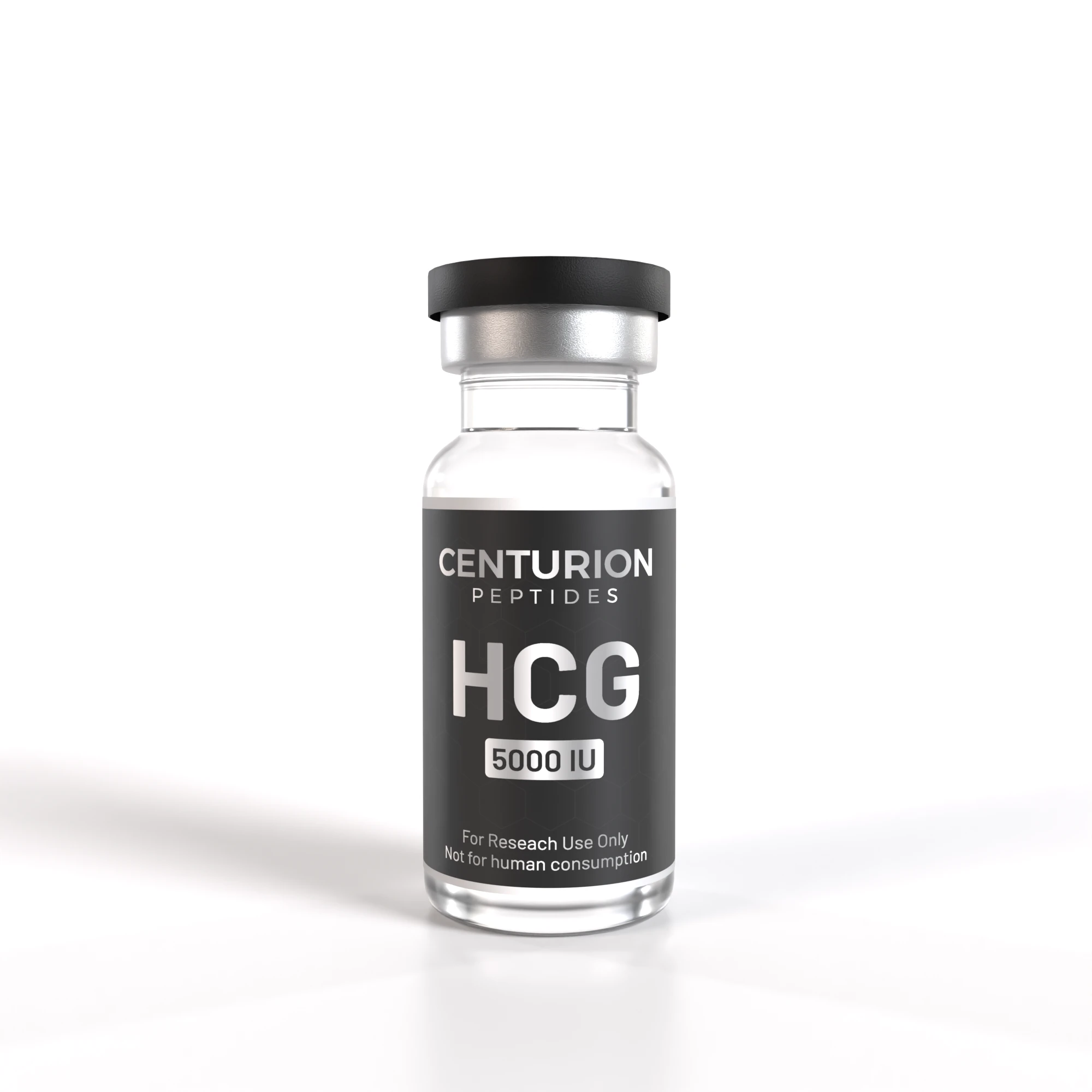
HCG 5,000 IU
Categories:
$50.00
FDA Disclaimer: The statements made within this website have not been evaluated by the US Food and Drug Administration. The statements and the products of this company are not intended to diagnose, treat, cure or prevent any disease. All products are for laboratory developmental research USE ONLY.
Guaranteed Safe Checkout
Money Back
Guarantee
SATISFACTION
GUARANTEED
EASY
RETURNS
SECURE
ORDERING
RAPID
SHIPPING
THIRD PARTY
TESTED
HCG 5,000 IU
Human Chorionic Gonadotropin (HCG) is a glycoprotein hormone composed of two non-covalently linked subunits (α and β) that is structurally and functionally related to luteinizing hormone (LH). In biological systems, HCG binds to the LH/CG receptor, activating intracellular signaling cascades that regulate gonadal steroidogenesis and reproductive endocrine function. Due to its high receptor affinity and prolonged biological activity, HCG has become a central molecule in reproductive endocrinology, developmental biology, and steroidogenesis research.
HCG 5,000 IU is commonly utilized in laboratory and experimental settings to investigate gonadal signaling pathways, testosterone biosynthesis, ovarian follicular dynamics, and broader endocrine system regulation.
Overview
HCG exerts its biological effects primarily by mimicking the action of luteinizing hormone. Upon binding to LH/CG receptors located on Leydig cells in the testes and theca and luteal cells in the ovaries, HCG stimulates cyclic AMP (cAMP) production, activating protein kinase A (PKA) and downstream transcriptional mechanisms that regulate steroid hormone synthesis.
Through this mechanism, HCG promotes the production of testosterone in male research models and progesterone and estrogen synthesis in female models. These hormonal effects make HCG an essential compound in studies involving reproductive physiology, gonadal development, endocrine feedback loops, and hormonal regulation.
- High-affinity agonist of LH/CG receptors
- Regulates gonadal steroidogenesis and reproductive signaling
- Activates cAMP–PKA intracellular pathways
- Supports testosterone, estrogen, and progesterone biosynthesis in experimental models
- Extensively studied in reproductive, developmental, and endocrine research
Specifications
- Hormone Type: Glycoprotein hormone
- Subunit Composition: α-subunit (~92 amino acids), β-subunit (~145 amino acids)
- Molecular Weight: ~36,700 Da
- Biological Activity: 5,000 International Units (IU)
- Other Names: Chorionic Gonadotropin, hCG
Research and Clinical Insights
Reproductive Endocrinology and Gonadal Function
HCG is extensively employed in research exploring gonadal steroidogenesis. In male models, HCG stimulates Leydig cell testosterone production, supporting studies on androgen biosynthesis, spermatogenesis regulation, and hypothalamic–pituitary–gonadal (HPG) axis dynamics. In female models, HCG regulates ovulatory signaling, luteal maintenance, and progesterone synthesis.
Cellular Signaling and Hormone Regulation
Upon receptor activation, HCG initiates intracellular cascades involving adenylate cyclase activation, increased cAMP concentrations, and PKA-mediated phosphorylation of steroidogenic enzymes. This molecular signaling network provides researchers with a valuable model for studying hormone-driven gene expression and endocrine system feedback mechanisms.
Developmental and Embryological Research
HCG plays a crucial role in early embryonic development by supporting corpus luteum function and maintaining progesterone secretion in early gestation models. These actions make HCG a fundamental tool in studies of implantation biology, placental signaling, and early developmental endocrinology.
Metabolic and Systemic Endocrine Effects
Beyond reproductive tissues, LH/CG receptors are expressed in multiple organ systems. Research suggests that HCG may influence metabolic processes, adipose tissue signaling, immune modulation, and angiogenesis, expanding its relevance beyond classical reproductive biology.
Usage Considerations
HCG 5,000 IU is supplied strictly for research and laboratory use. It is not approved for human therapeutic application. All experimental handling, storage, and usage must comply with institutional safety standards and regulatory guidelines.
Notice: HCG is provided for research purposes only. Please review and adhere to all Terms and Conditions prior to ordering.
HCG 5,000 IU
Human Chorionic Gonadotropin (HCG) is a glycoprotein hormone composed of two non-covalently linked subunits (α and β) that is structurally and functionally related to luteinizing hormone (LH). In biological systems, HCG binds to the LH/CG receptor, activating intracellular signaling cascades that regulate gonadal steroidogenesis and reproductive endocrine function. Due to its high receptor affinity and prolonged biological activity, HCG has become a central molecule in reproductive endocrinology, developmental biology, and steroidogenesis research.
HCG 5,000 IU is commonly utilized in laboratory and experimental settings to investigate gonadal signaling pathways, testosterone biosynthesis, ovarian follicular dynamics, and broader endocrine system regulation.
Overview
HCG exerts its biological effects primarily by mimicking the action of luteinizing hormone. Upon binding to LH/CG receptors located on Leydig cells in the testes and theca and luteal cells in the ovaries, HCG stimulates cyclic AMP (cAMP) production, activating protein kinase A (PKA) and downstream transcriptional mechanisms that regulate steroid hormone synthesis.
Through this mechanism, HCG promotes the production of testosterone in male research models and progesterone and estrogen synthesis in female models. These hormonal effects make HCG an essential compound in studies involving reproductive physiology, gonadal development, endocrine feedback loops, and hormonal regulation.
- High-affinity agonist of LH/CG receptors
- Regulates gonadal steroidogenesis and reproductive signaling
- Activates cAMP–PKA intracellular pathways
- Supports testosterone, estrogen, and progesterone biosynthesis in experimental models
- Extensively studied in reproductive, developmental, and endocrine research
Specifications
- Hormone Type: Glycoprotein hormone
- Subunit Composition: α-subunit (~92 amino acids), β-subunit (~145 amino acids)
- Molecular Weight: ~36,700 Da
- Biological Activity: 5,000 International Units (IU)
- Other Names: Chorionic Gonadotropin, hCG
Research and Clinical Insights
Reproductive Endocrinology and Gonadal Function
HCG is extensively employed in research exploring gonadal steroidogenesis. In male models, HCG stimulates Leydig cell testosterone production, supporting studies on androgen biosynthesis, spermatogenesis regulation, and hypothalamic–pituitary–gonadal (HPG) axis dynamics. In female models, HCG regulates ovulatory signaling, luteal maintenance, and progesterone synthesis.
Cellular Signaling and Hormone Regulation
Upon receptor activation, HCG initiates intracellular cascades involving adenylate cyclase activation, increased cAMP concentrations, and PKA-mediated phosphorylation of steroidogenic enzymes. This molecular signaling network provides researchers with a valuable model for studying hormone-driven gene expression and endocrine system feedback mechanisms.
Developmental and Embryological Research
HCG plays a crucial role in early embryonic development by supporting corpus luteum function and maintaining progesterone secretion in early gestation models. These actions make HCG a fundamental tool in studies of implantation biology, placental signaling, and early developmental endocrinology.
Metabolic and Systemic Endocrine Effects
Beyond reproductive tissues, LH/CG receptors are expressed in multiple organ systems. Research suggests that HCG may influence metabolic processes, adipose tissue signaling, immune modulation, and angiogenesis, expanding its relevance beyond classical reproductive biology.
Usage Considerations
HCG 5,000 IU is supplied strictly for research and laboratory use. It is not approved for human therapeutic application. All experimental handling, storage, and usage must comply with institutional safety standards and regulatory guidelines.
Notice: HCG is provided for research purposes only. Please review and adhere to all Terms and Conditions prior to ordering.
Related Products
-
CARGRILINTIDE
Peptides $20.00 – $40.00Price range: $20.00 through $40.00 This product has multiple variants. The options may be chosen on the product page
Reviews
There are no reviews yet.