
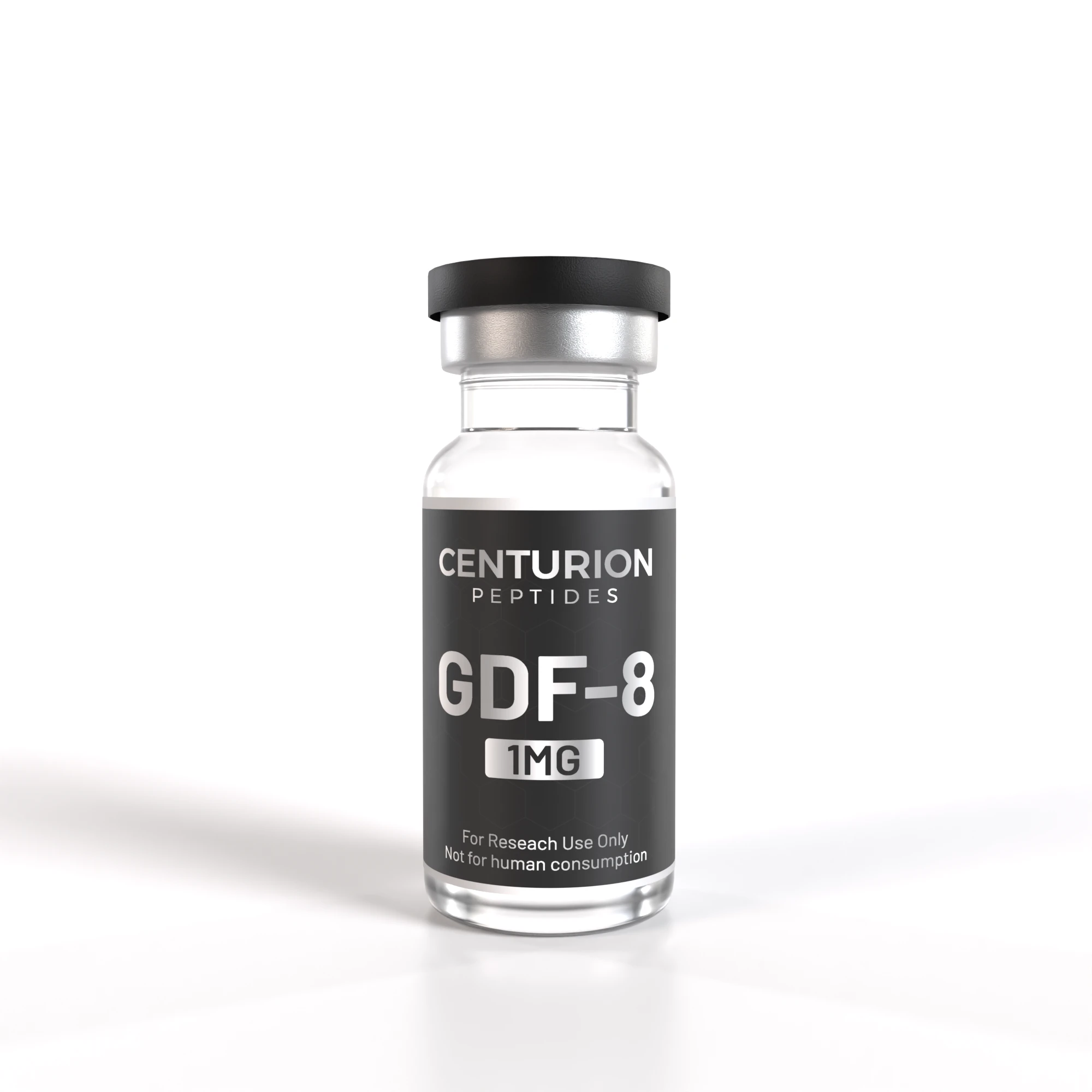
GDF-8 1MG
Categories:
$75.00
FDA Disclaimer: The statements made within this website have not been evaluated by the US Food and Drug Administration. The statements and the products of this company are not intended to diagnose, treat, cure or prevent any disease. All products are for laboratory developmental research USE ONLY.
Guaranteed Safe Checkout
Money Back
Guarantee
SATISFACTION
GUARANTEED
EASY
RETURNS
SECURE
ORDERING
RAPID
SHIPPING
THIRD PARTY
TESTED
GDF-8
GDF-8 (Growth Differentiation Factor-8), commonly known as Myostatin, is a member of the transforming growth factor-beta (TGF-β) superfamily and serves as a key negative regulator of skeletal muscle growth. It is primarily expressed in skeletal muscle and functions to inhibit myogenesis, maintaining muscle mass homeostasis. Due to its central role in regulating muscle development and tissue remodeling, GDF-8 is widely studied in research focused on muscle hypertrophy, sarcopenia, metabolic regulation, and regenerative medicine.
GDF-8 is actively investigated in experimental models to understand its effects on muscle cell proliferation, differentiation, satellite cell activity, and signaling pathways that regulate muscle mass and metabolic function.
Overview
GDF-8 exerts its biological activity by binding to the activin type II receptors (ActRIIA and ActRIIB) on muscle cells, activating the SMAD2/3 intracellular signaling pathway. This pathway inhibits myoblast proliferation and differentiation, thereby regulating skeletal muscle growth. The suppression of GDF-8 activity has been shown in research to increase muscle fiber size, enhance muscle strength, and improve overall muscular performance.
Because of its potent inhibitory effect on muscle growth, GDF-8 has become a critical tool in studies exploring muscle wasting conditions, regenerative therapy, metabolic disorders, and potential therapeutic interventions for sarcopenia and cachexia.
- Negative regulator of skeletal muscle growth
- Modulates myoblast proliferation, differentiation, and satellite cell activity
- Activates SMAD2/3 signaling via activin type II receptors
- Investigated in muscle hypertrophy, sarcopenia, and metabolic research
- Potential target for regenerative and therapeutic interventions in muscle-wasting conditions
Specifications
- Protein Type: Growth differentiation factor, TGF-β family member
- Amino Acid Length: 109 amino acids (mature GDF-8 peptide)
- Molecular Formula: C509H786N134O160S8
- Molecular Weight: ~24.7 kDa
- Other Names: Myostatin, GDF8
Research and Clinical Insights
Muscle Growth Regulation
GDF-8 acts as a critical inhibitory factor for skeletal muscle development. Experimental models show that reducing or blocking GDF-8 activity results in increased myoblast proliferation, muscle fiber hypertrophy, and overall skeletal muscle mass enhancement. Conversely, elevated GDF-8 activity is associated with muscle wasting conditions.
Satellite Cell Activity and Tissue Regeneration
GDF-8 regulates satellite cells, the resident stem cells of skeletal muscle. By inhibiting excessive satellite cell activation and differentiation, GDF-8 ensures controlled muscle growth and repair. Research into GDF-8 modulation provides insights into regenerative strategies for injured or degenerated muscle tissue.
Metabolic and Endocrine Implications
GDF-8 influences systemic metabolism through its effects on skeletal muscle mass, which in turn affects glucose utilization, insulin sensitivity, and overall energy balance. Experimental studies suggest that GDF-8 may play a role in metabolic disorders linked to muscle atrophy and insulin resistance.
Applications in Aging and Muscle-Wasting Research
GDF-8 is extensively studied in age-related sarcopenia, cachexia, and other conditions involving progressive loss of skeletal muscle mass. Targeted modulation of GDF-8 signaling represents a promising area for therapeutic research aimed at restoring muscle strength and functional capacity.
Usage Considerations
GDF-8 is supplied strictly for research and laboratory use. It is not approved for human therapeutic application. All handling, storage, and experimental procedures must follow institutional safety protocols and regulatory standards.
Notice: GDF-8 is provided for research purposes only. Please review and adhere to all Terms and Conditions prior to ordering.
| Size | 5 MG, 10 MG, 15 MG, 20 MG |
|---|
GDF-8
GDF-8 (Growth Differentiation Factor-8), commonly known as Myostatin, is a member of the transforming growth factor-beta (TGF-β) superfamily and serves as a key negative regulator of skeletal muscle growth. It is primarily expressed in skeletal muscle and functions to inhibit myogenesis, maintaining muscle mass homeostasis. Due to its central role in regulating muscle development and tissue remodeling, GDF-8 is widely studied in research focused on muscle hypertrophy, sarcopenia, metabolic regulation, and regenerative medicine.
GDF-8 is actively investigated in experimental models to understand its effects on muscle cell proliferation, differentiation, satellite cell activity, and signaling pathways that regulate muscle mass and metabolic function.
Overview
GDF-8 exerts its biological activity by binding to the activin type II receptors (ActRIIA and ActRIIB) on muscle cells, activating the SMAD2/3 intracellular signaling pathway. This pathway inhibits myoblast proliferation and differentiation, thereby regulating skeletal muscle growth. The suppression of GDF-8 activity has been shown in research to increase muscle fiber size, enhance muscle strength, and improve overall muscular performance.
Because of its potent inhibitory effect on muscle growth, GDF-8 has become a critical tool in studies exploring muscle wasting conditions, regenerative therapy, metabolic disorders, and potential therapeutic interventions for sarcopenia and cachexia.
- Negative regulator of skeletal muscle growth
- Modulates myoblast proliferation, differentiation, and satellite cell activity
- Activates SMAD2/3 signaling via activin type II receptors
- Investigated in muscle hypertrophy, sarcopenia, and metabolic research
- Potential target for regenerative and therapeutic interventions in muscle-wasting conditions
Specifications
- Protein Type: Growth differentiation factor, TGF-β family member
- Amino Acid Length: 109 amino acids (mature GDF-8 peptide)
- Molecular Formula: C509H786N134O160S8
- Molecular Weight: ~24.7 kDa
- Other Names: Myostatin, GDF8
Research and Clinical Insights
Muscle Growth Regulation
GDF-8 acts as a critical inhibitory factor for skeletal muscle development. Experimental models show that reducing or blocking GDF-8 activity results in increased myoblast proliferation, muscle fiber hypertrophy, and overall skeletal muscle mass enhancement. Conversely, elevated GDF-8 activity is associated with muscle wasting conditions.
Satellite Cell Activity and Tissue Regeneration
GDF-8 regulates satellite cells, the resident stem cells of skeletal muscle. By inhibiting excessive satellite cell activation and differentiation, GDF-8 ensures controlled muscle growth and repair. Research into GDF-8 modulation provides insights into regenerative strategies for injured or degenerated muscle tissue.
Metabolic and Endocrine Implications
GDF-8 influences systemic metabolism through its effects on skeletal muscle mass, which in turn affects glucose utilization, insulin sensitivity, and overall energy balance. Experimental studies suggest that GDF-8 may play a role in metabolic disorders linked to muscle atrophy and insulin resistance.
Applications in Aging and Muscle-Wasting Research
GDF-8 is extensively studied in age-related sarcopenia, cachexia, and other conditions involving progressive loss of skeletal muscle mass. Targeted modulation of GDF-8 signaling represents a promising area for therapeutic research aimed at restoring muscle strength and functional capacity.
Usage Considerations
GDF-8 is supplied strictly for research and laboratory use. It is not approved for human therapeutic application. All handling, storage, and experimental procedures must follow institutional safety protocols and regulatory standards.
Notice: GDF-8 is provided for research purposes only. Please review and adhere to all Terms and Conditions prior to ordering.
Related Products
-
CARGRILINTIDE
Peptides $20.00 – $40.00Price range: $20.00 through $40.00 This product has multiple variants. The options may be chosen on the product page



Reviews
There are no reviews yet.