
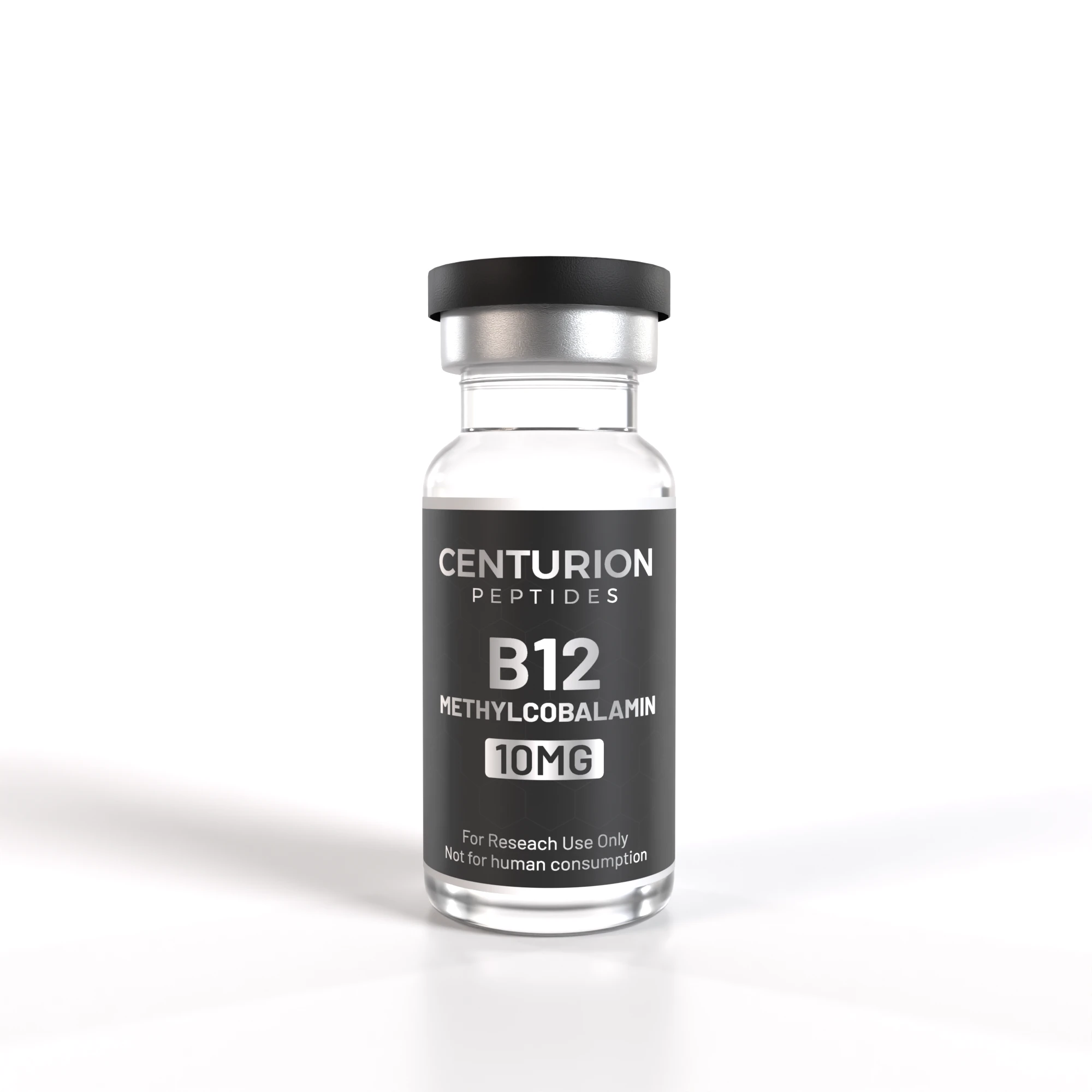
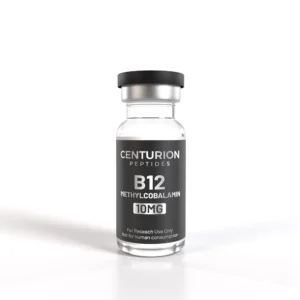
B12 METHYL-COBALAMIN 10MG
Categories:
$85.00
FDA Disclaimer: The statements made within this website have not been evaluated by the US Food and Drug Administration. The statements and the products of this company are not intended to diagnose, treat, cure or prevent any disease. All products are for laboratory developmental research USE ONLY.
Guaranteed Safe Checkout
Money Back
Guarantee
SATISFACTION
GUARANTEED
EASY
RETURNS
SECURE
ORDERING
RAPID
SHIPPING
THIRD PARTY
TESTED
- B12 Methylcobalamin
B12 Methylcobalamin is a biologically active, coenzyme form of vitamin B12, essential for DNA synthesis, red blood cell formation, neurological function, and cellular energy metabolism. Unlike other forms of vitamin B12, methylcobalamin directly participates in methylation reactions, supporting homocysteine metabolism and neurotransmitter synthesis. Its high bioavailability and direct physiological activity make it a key compound in biochemical and metabolic research.
Research on methylcobalamin focuses on its role in neural health, hematopoiesis, cellular energy production, and methylation-dependent biochemical pathways.
Overview
Methylcobalamin serves as a cofactor for methionine synthase, an enzyme that catalyzes the conversion of homocysteine to methionine, a critical step in the methylation cycle. This activity supports DNA methylation, neurotransmitter production, and the maintenance of healthy nerve tissue. Additionally, methylcobalamin is involved in the synthesis of S-adenosylmethionine (SAMe), a universal methyl donor essential for multiple biochemical reactions.
Through these mechanisms, B12 methylcobalamin is a valuable research compound for studying neuroprotection, cardiovascular health, epigenetic regulation, and cellular energy metabolism.
- Essential coenzyme for DNA synthesis and red blood cell formation
- Supports methylation cycles and homocysteine metabolism
- Promotes neurological health and neurotransmitter synthesis
- Enhances cellular energy production via mitochondrial function
- Investigated in neurobiological, hematological, and metabolic research
Specifications
- Peptide/Compound Type: Vitamin B12 active coenzyme
- Chemical Name: Methylcobalamin
- Molecular Formula: C63H91CoN13O14P
- Molecular Weight: 1344.38 g/mol
- Other Names: Methylcobalamin, MeCbl, Active B12
Research and Clinical Insights
Neurological Health
Methylcobalamin supports nerve tissue regeneration and maintenance by facilitating myelin synthesis and promoting methylation-dependent neurotransmitter production. Experimental studies suggest its potential in neurodegenerative research, peripheral neuropathy models, and neural repair mechanisms.
Hematological Function
B12 methylcobalamin is essential for red blood cell production and proper hematopoiesis. Research demonstrates its role in correcting B12 deficiency-associated anemia and supporting overall hematological homeostasis.
Methylation and Epigenetic Regulation
As a methyl donor cofactor, methylcobalamin participates in homocysteine metabolism, DNA methylation, and the production of S-adenosylmethionine (SAMe). These processes are critical for cellular function, epigenetic regulation, and genomic stability in experimental models.
Energy Metabolism
Methylcobalamin supports mitochondrial function and ATP production by facilitating enzymatic reactions within the methylation and folate cycles. Research models indicate its relevance for studies of cellular energy balance and metabolic health.
Usage Considerations
B12 Methylcobalamin is supplied strictly for research and laboratory use. It is not approved for human therapeutic application. All handling, storage, and experimental procedures must follow institutional safety protocols and regulatory guidelines.
Notice: B12 Methylcobalamin is provided for research purposes only. Please review and adhere to all Terms and Conditions prior to ordering.
| Size | 5 MG, 10 MG |
|---|
- B12 Methylcobalamin
B12 Methylcobalamin is a biologically active, coenzyme form of vitamin B12, essential for DNA synthesis, red blood cell formation, neurological function, and cellular energy metabolism. Unlike other forms of vitamin B12, methylcobalamin directly participates in methylation reactions, supporting homocysteine metabolism and neurotransmitter synthesis. Its high bioavailability and direct physiological activity make it a key compound in biochemical and metabolic research.
Research on methylcobalamin focuses on its role in neural health, hematopoiesis, cellular energy production, and methylation-dependent biochemical pathways.
Overview
Methylcobalamin serves as a cofactor for methionine synthase, an enzyme that catalyzes the conversion of homocysteine to methionine, a critical step in the methylation cycle. This activity supports DNA methylation, neurotransmitter production, and the maintenance of healthy nerve tissue. Additionally, methylcobalamin is involved in the synthesis of S-adenosylmethionine (SAMe), a universal methyl donor essential for multiple biochemical reactions.
Through these mechanisms, B12 methylcobalamin is a valuable research compound for studying neuroprotection, cardiovascular health, epigenetic regulation, and cellular energy metabolism.
- Essential coenzyme for DNA synthesis and red blood cell formation
- Supports methylation cycles and homocysteine metabolism
- Promotes neurological health and neurotransmitter synthesis
- Enhances cellular energy production via mitochondrial function
- Investigated in neurobiological, hematological, and metabolic research
Specifications
- Peptide/Compound Type: Vitamin B12 active coenzyme
- Chemical Name: Methylcobalamin
- Molecular Formula: C63H91CoN13O14P
- Molecular Weight: 1344.38 g/mol
- Other Names: Methylcobalamin, MeCbl, Active B12
Research and Clinical Insights
Neurological Health
Methylcobalamin supports nerve tissue regeneration and maintenance by facilitating myelin synthesis and promoting methylation-dependent neurotransmitter production. Experimental studies suggest its potential in neurodegenerative research, peripheral neuropathy models, and neural repair mechanisms.
Hematological Function
B12 methylcobalamin is essential for red blood cell production and proper hematopoiesis. Research demonstrates its role in correcting B12 deficiency-associated anemia and supporting overall hematological homeostasis.
Methylation and Epigenetic Regulation
As a methyl donor cofactor, methylcobalamin participates in homocysteine metabolism, DNA methylation, and the production of S-adenosylmethionine (SAMe). These processes are critical for cellular function, epigenetic regulation, and genomic stability in experimental models.
Energy Metabolism
Methylcobalamin supports mitochondrial function and ATP production by facilitating enzymatic reactions within the methylation and folate cycles. Research models indicate its relevance for studies of cellular energy balance and metabolic health.
Usage Considerations
B12 Methylcobalamin is supplied strictly for research and laboratory use. It is not approved for human therapeutic application. All handling, storage, and experimental procedures must follow institutional safety protocols and regulatory guidelines.
Notice: B12 Methylcobalamin is provided for research purposes only. Please review and adhere to all Terms and Conditions prior to ordering.
Related Products
-
CARGRILINTIDE
Peptides $20.00 – $40.00Price range: $20.00 through $40.00 This product has multiple variants. The options may be chosen on the product page
Reviews
There are no reviews yet.