
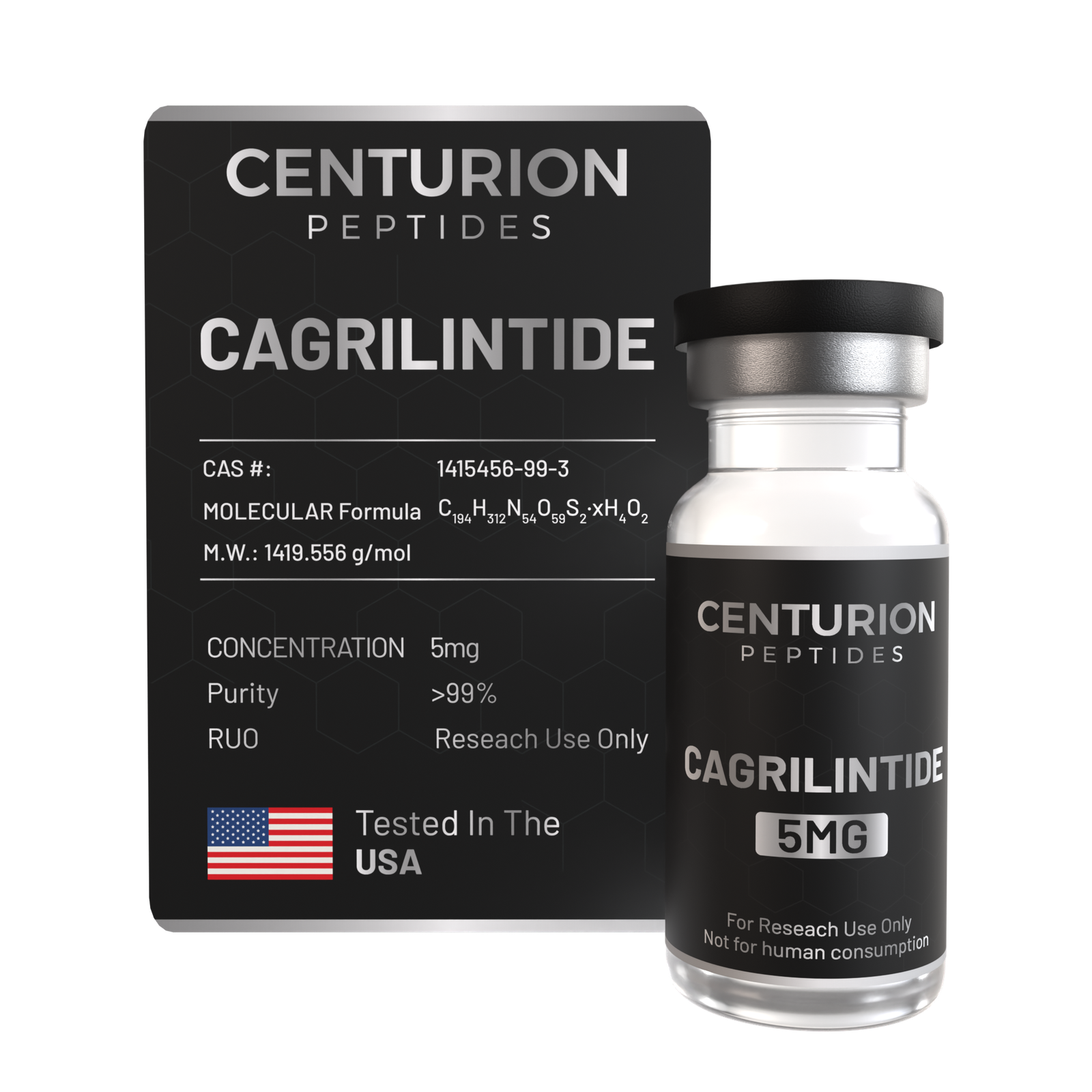
CARGRILINTIDE
Categories:
$20.00 – $40.00Price range: $20.00 through $40.00
FDA Disclaimer: The statements made within this website have not been evaluated by the US Food and Drug Administration. The statements and the products of this company are not intended to diagnose, treat, cure or prevent any disease. All products are for laboratory developmental research USE ONLY.
Guaranteed Safe Checkout
Money Back
Guarantee
SATISFACTION
GUARANTEED
EASY
RETURNS
SECURE
ORDERING
RAPID
SHIPPING
THIRD PARTY
TESTED
Cagrilintide
Cagrilintide is a synthetic peptide analog of amylin, a hormone co-secreted with insulin by pancreatic β-cells. Cagrilintide is designed to modulate appetite, glycemic control, and metabolic processes, making it a valuable research tool in studies of obesity, diabetes, and metabolic regulation. Its structural modifications enhance stability and prolong biological activity in experimental models.
Research on Cagrilintide focuses on its effects on food intake, glucose homeostasis, weight management, and energy metabolism, as well as its potential interactions with other peptide hormones such as GLP-1.
Overview
Cagrilintide acts primarily through the amylin receptor, a calcitonin receptor complex, located in the central nervous system and peripheral tissues. Activation of this receptor slows gastric emptying, suppresses appetite, and influences energy balance. Additionally, Cagrilintide modulates postprandial glucagon secretion, contributing to improved glycemic regulation in experimental settings.
Through these mechanisms, Cagrilintide provides researchers with a model for studying peptide-mediated metabolic control, appetite regulation, and potential interventions for obesity and diabetes-related research.
- Modulates appetite and satiety via central nervous system pathways
- Slows gastric emptying and regulates nutrient absorption
- Influences glucagon secretion and postprandial glycemic control
- Investigated in metabolic, obesity, and diabetes research models
- Supports studies of peptide interactions and energy homeostasis
Specifications
- Peptide Type: Amylin analog
- Amino Acid Length: Research-grade synthetic peptide
- Molecular Formula: C151H243N43O46S
- Molecular Weight: ~3.45 kDa
- Other Names: Cagrilintide, Amylin Analog
Research and Clinical Insights
Appetite and Satiety Regulation
Cagrilintide has been shown in experimental models to reduce food intake by activating amylin receptors in the hypothalamus. This modulation of central appetite centers helps researchers study mechanisms of satiety and energy balance.
Gastrointestinal Effects
By slowing gastric emptying, Cagrilintide prolongs nutrient absorption and regulates postprandial glucose responses. This effect is valuable for modeling glycemic control and studying peptide-mediated gastrointestinal signaling.
Metabolic and Endocrine Implications
Cagrilintide influences glucagon secretion, improves insulin-glucose dynamics, and contributes to energy homeostasis. These properties make it a powerful tool for investigating metabolic disorders, obesity, and diabetes-related research pathways.
Applications in Obesity and Diabetes Research
Experimental use of Cagrilintide allows researchers to explore combinational peptide therapies, weight management strategies, and metabolic regulation interventions. Its stability and prolonged activity provide reliable modeling of long-term metabolic effects.
Usage Considerations
Cagrilintide is supplied strictly for research and laboratory use. It is not approved for human therapeutic application. All handling, storage, and experimental procedures must follow institutional safety standards and regulatory guidelines.
Notice: Cagrilintide is provided for research purposes only. Please review and adhere to all Terms and Conditions prior to ordering.
| Size | 5 MG, 10 MG |
|---|
Cagrilintide
Cagrilintide is a synthetic peptide analog of amylin, a hormone co-secreted with insulin by pancreatic β-cells. Cagrilintide is designed to modulate appetite, glycemic control, and metabolic processes, making it a valuable research tool in studies of obesity, diabetes, and metabolic regulation. Its structural modifications enhance stability and prolong biological activity in experimental models.
Research on Cagrilintide focuses on its effects on food intake, glucose homeostasis, weight management, and energy metabolism, as well as its potential interactions with other peptide hormones such as GLP-1.
Overview
Cagrilintide acts primarily through the amylin receptor, a calcitonin receptor complex, located in the central nervous system and peripheral tissues. Activation of this receptor slows gastric emptying, suppresses appetite, and influences energy balance. Additionally, Cagrilintide modulates postprandial glucagon secretion, contributing to improved glycemic regulation in experimental settings.
Through these mechanisms, Cagrilintide provides researchers with a model for studying peptide-mediated metabolic control, appetite regulation, and potential interventions for obesity and diabetes-related research.
- Modulates appetite and satiety via central nervous system pathways
- Slows gastric emptying and regulates nutrient absorption
- Influences glucagon secretion and postprandial glycemic control
- Investigated in metabolic, obesity, and diabetes research models
- Supports studies of peptide interactions and energy homeostasis
Specifications
- Peptide Type: Amylin analog
- Amino Acid Length: Research-grade synthetic peptide
- Molecular Formula: C151H243N43O46S
- Molecular Weight: ~3.45 kDa
- Other Names: Cagrilintide, Amylin Analog
Research and Clinical Insights
Appetite and Satiety Regulation
Cagrilintide has been shown in experimental models to reduce food intake by activating amylin receptors in the hypothalamus. This modulation of central appetite centers helps researchers study mechanisms of satiety and energy balance.
Gastrointestinal Effects
By slowing gastric emptying, Cagrilintide prolongs nutrient absorption and regulates postprandial glucose responses. This effect is valuable for modeling glycemic control and studying peptide-mediated gastrointestinal signaling.
Metabolic and Endocrine Implications
Cagrilintide influences glucagon secretion, improves insulin-glucose dynamics, and contributes to energy homeostasis. These properties make it a powerful tool for investigating metabolic disorders, obesity, and diabetes-related research pathways.
Applications in Obesity and Diabetes Research
Experimental use of Cagrilintide allows researchers to explore combinational peptide therapies, weight management strategies, and metabolic regulation interventions. Its stability and prolonged activity provide reliable modeling of long-term metabolic effects.
Usage Considerations
Cagrilintide is supplied strictly for research and laboratory use. It is not approved for human therapeutic application. All handling, storage, and experimental procedures must follow institutional safety standards and regulatory guidelines.
Notice: Cagrilintide is provided for research purposes only. Please review and adhere to all Terms and Conditions prior to ordering.
Related Products
-
CARGRILINTIDE
Peptides $20.00 – $40.00Price range: $20.00 through $40.00 This product has multiple variants. The options may be chosen on the product page


Reviews
There are no reviews yet.