
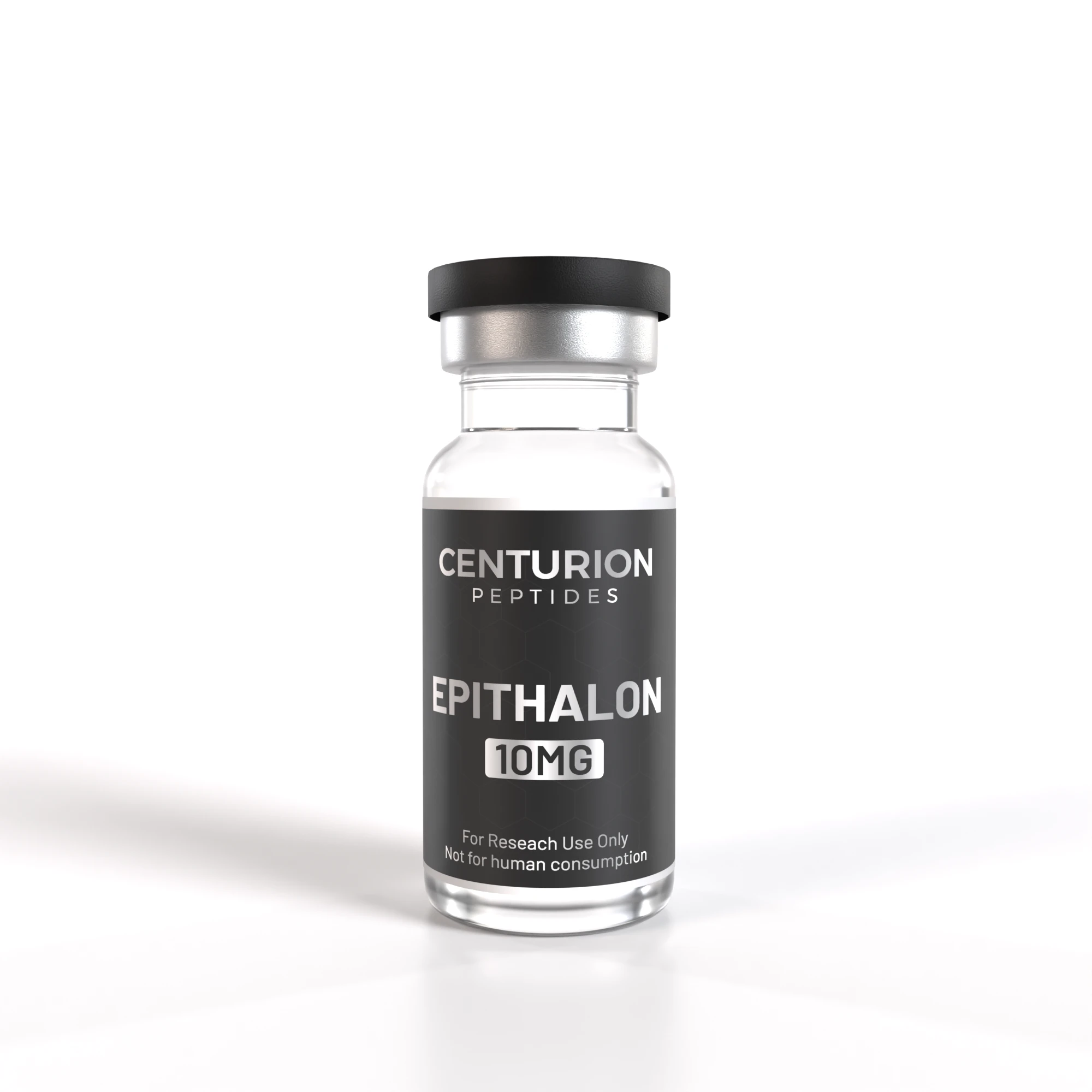
EPITHALON 10MG
Categories:
$75.00
FDA Disclaimer: The statements made within this website have not been evaluated by the US Food and Drug Administration. The statements and the products of this company are not intended to diagnose, treat, cure or prevent any disease. All products are for laboratory developmental research USE ONLY.
Guaranteed Safe Checkout
Money Back
Guarantee
SATISFACTION
GUARANTEED
EASY
RETURNS
SECURE
ORDERING
RAPID
SHIPPING
THIRD PARTY
TESTED
Epithalon
Epithalon, also known as Epitalon or Epithalamin, is a synthetic tetrapeptide composed of four amino acids: Ala–Glu–Asp–Gly. It is derived from research on the pineal gland and is closely associated with regulation of the aging process, cellular longevity, and telomere maintenance. Epithalon has gained significant scientific interest due to its potential to modulate the activity of telomerase, promote DNA stability, and support systemic cellular health.
Epithalon is extensively investigated in experimental models for its effects on aging, regenerative processes, endocrine regulation, and the mitigation of age-related cellular decline.
Overview
Epithalon exerts its biological activity by influencing the expression and activity of telomerase, an enzyme that maintains telomere length at the ends of chromosomes. By promoting telomere stability, Epithalon contributes to enhanced genomic integrity, delayed cellular senescence, and prolonged replicative capacity of somatic cells. Additionally, Epithalon interacts with neuroendocrine signaling pathways, influencing pineal gland function, melatonin secretion, and circadian rhythm regulation.
Through these mechanisms, Epithalon is considered a powerful research tool in studies exploring aging, cellular regeneration, neuroendocrine health, and longevity biology.
- Regulates telomerase activity and telomere maintenance
- Supports genomic stability and delays cellular senescence
- Modulates neuroendocrine function and pineal gland activity
- Promotes cellular regeneration and longevity pathways
- Investigated in aging, regenerative, and neuroendocrine research
Specifications
- Peptide Sequence: Ala–Glu–Asp–Gly
- Peptide Type: Tetrapeptide
- Molecular Formula: C14H22N4O9
- Molecular Weight: ~302.3 g/mol
- Other Names: Epitalon, Epithalamin
Research and Clinical Insights
Telomere Maintenance and Cellular Longevity
Epithalon has been shown in experimental models to activate telomerase, thereby extending telomere length and delaying cellular aging. These actions help maintain chromosomal integrity, reduce DNA damage accumulation, and enhance the replicative potential of somatic cells.
Endocrine and Pineal Gland Effects
Epithalon modulates the neuroendocrine system by influencing melatonin production and pineal gland activity. This regulation supports circadian rhythm stability, hormone balance, and systemic physiological homeostasis.
Antioxidant and DNA Protective Effects
Studies indicate that Epithalon reduces oxidative stress, protects DNA from damage, and enhances cellular repair mechanisms. These effects contribute to improved cellular resilience and longevity.
Regenerative and Anti-Aging Applications
Epithalon is widely investigated for its potential in slowing age-related decline, supporting tissue regeneration, and improving markers of systemic health. Research models demonstrate benefits in neuroprotection, immune function, and overall cellular vitality.
Usage Considerations
Epithalon is supplied strictly for research and laboratory use. It is not approved for human therapeutic application. All handling, storage, and experimental usage must follow institutional safety standards and regulatory guidelines.
Notice: Epithalon is provided for research purposes only. Please review and adhere to all Terms and Conditions prior to ordering.
| Size | 5 MG, 10 MG, 15 MG, 20 MG |
|---|
Epithalon
Epithalon, also known as Epitalon or Epithalamin, is a synthetic tetrapeptide composed of four amino acids: Ala–Glu–Asp–Gly. It is derived from research on the pineal gland and is closely associated with regulation of the aging process, cellular longevity, and telomere maintenance. Epithalon has gained significant scientific interest due to its potential to modulate the activity of telomerase, promote DNA stability, and support systemic cellular health.
Epithalon is extensively investigated in experimental models for its effects on aging, regenerative processes, endocrine regulation, and the mitigation of age-related cellular decline.
Overview
Epithalon exerts its biological activity by influencing the expression and activity of telomerase, an enzyme that maintains telomere length at the ends of chromosomes. By promoting telomere stability, Epithalon contributes to enhanced genomic integrity, delayed cellular senescence, and prolonged replicative capacity of somatic cells. Additionally, Epithalon interacts with neuroendocrine signaling pathways, influencing pineal gland function, melatonin secretion, and circadian rhythm regulation.
Through these mechanisms, Epithalon is considered a powerful research tool in studies exploring aging, cellular regeneration, neuroendocrine health, and longevity biology.
- Regulates telomerase activity and telomere maintenance
- Supports genomic stability and delays cellular senescence
- Modulates neuroendocrine function and pineal gland activity
- Promotes cellular regeneration and longevity pathways
- Investigated in aging, regenerative, and neuroendocrine research
Specifications
- Peptide Sequence: Ala–Glu–Asp–Gly
- Peptide Type: Tetrapeptide
- Molecular Formula: C14H22N4O9
- Molecular Weight: ~302.3 g/mol
- Other Names: Epitalon, Epithalamin
Research and Clinical Insights
Telomere Maintenance and Cellular Longevity
Epithalon has been shown in experimental models to activate telomerase, thereby extending telomere length and delaying cellular aging. These actions help maintain chromosomal integrity, reduce DNA damage accumulation, and enhance the replicative potential of somatic cells.
Endocrine and Pineal Gland Effects
Epithalon modulates the neuroendocrine system by influencing melatonin production and pineal gland activity. This regulation supports circadian rhythm stability, hormone balance, and systemic physiological homeostasis.
Antioxidant and DNA Protective Effects
Studies indicate that Epithalon reduces oxidative stress, protects DNA from damage, and enhances cellular repair mechanisms. These effects contribute to improved cellular resilience and longevity.
Regenerative and Anti-Aging Applications
Epithalon is widely investigated for its potential in slowing age-related decline, supporting tissue regeneration, and improving markers of systemic health. Research models demonstrate benefits in neuroprotection, immune function, and overall cellular vitality.
Usage Considerations
Epithalon is supplied strictly for research and laboratory use. It is not approved for human therapeutic application. All handling, storage, and experimental usage must follow institutional safety standards and regulatory guidelines.
Notice: Epithalon is provided for research purposes only. Please review and adhere to all Terms and Conditions prior to ordering.
Related Products
-
CARGRILINTIDE
Peptides $20.00 – $40.00Price range: $20.00 through $40.00 This product has multiple variants. The options may be chosen on the product page

Reviews
There are no reviews yet.