
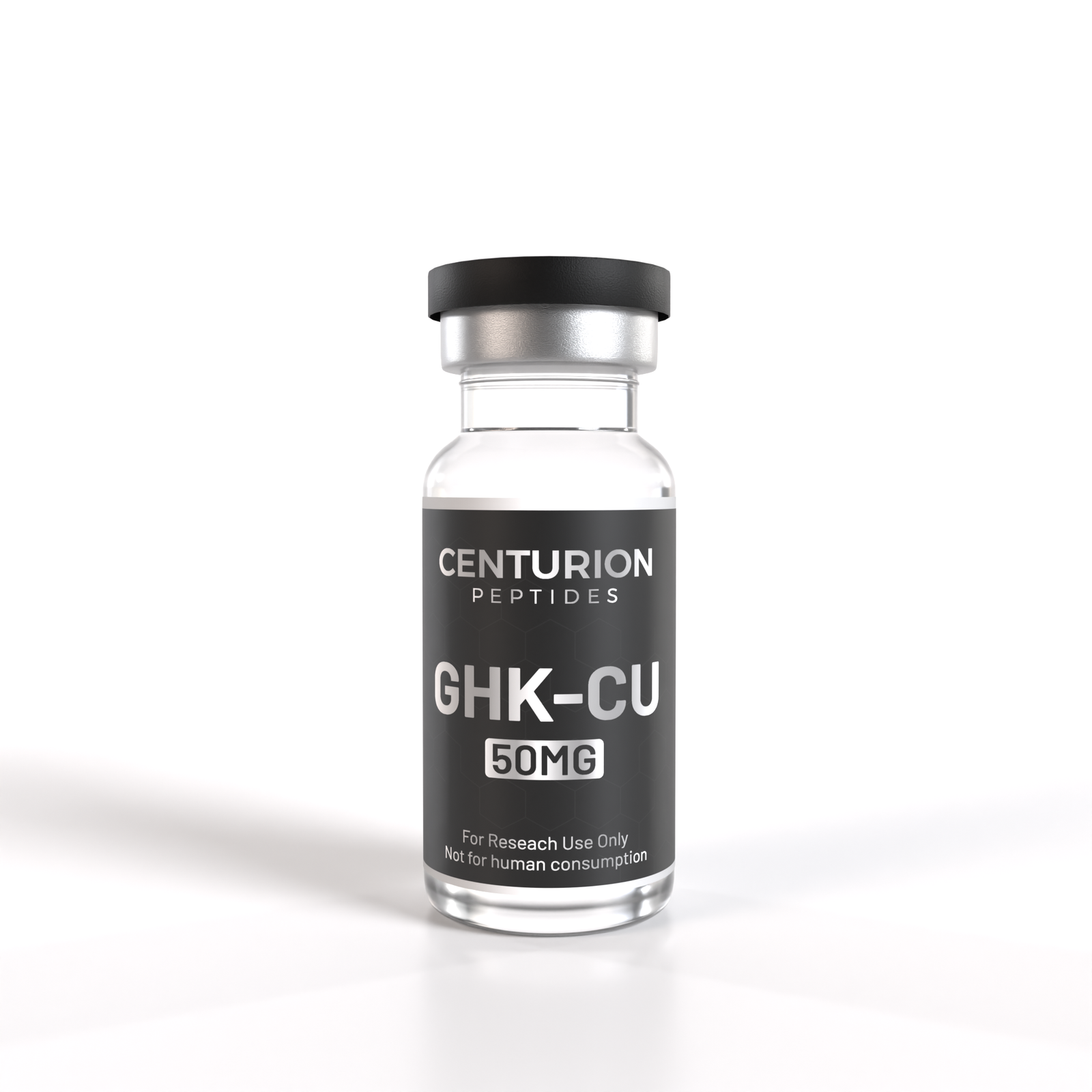
GHK-CU 50MG
Categories:
$75.00
FDA Disclaimer: The statements made within this website have not been evaluated by the US Food and Drug Administration. The statements and the products of this company are not intended to diagnose, treat, cure or prevent any disease. All products are for laboratory developmental research USE ONLY.
Guaranteed Safe Checkout
Money Back
Guarantee
SATISFACTION
GUARANTEED
EASY
RETURNS
SECURE
ORDERING
RAPID
SHIPPING
THIRD PARTY
TESTED
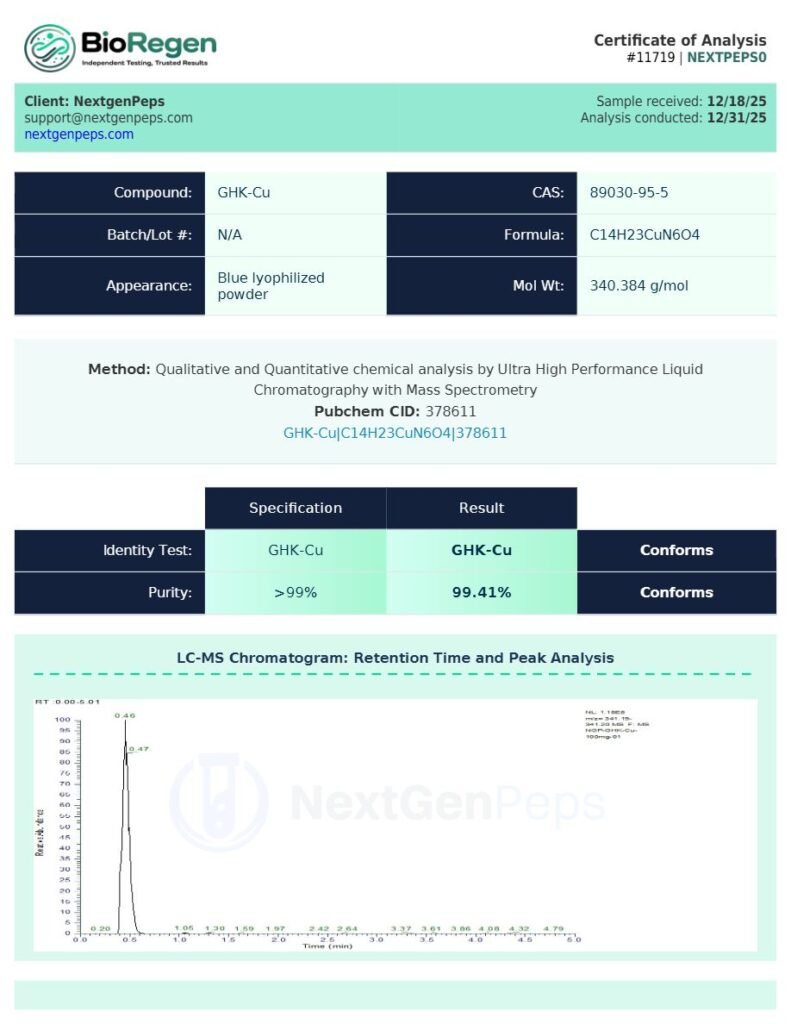
GHK-Cu
GHK-Cu (Glycyl-L-Histidyl-L-Lysine Copper Complex) is a naturally occurring tripeptide that binds copper ions and exhibits potent regenerative, antioxidant, and tissue-repairing properties. Originally discovered in human plasma, GHK-Cu is involved in wound healing, extracellular matrix remodeling, anti-inflammatory signaling, and skin health. Its ability to modulate gene expression and support tissue regeneration has made it a central molecule in experimental studies of dermatology, regenerative medicine, and cellular longevity.
GHK-Cu is widely investigated for its multifaceted effects, including collagen synthesis, angiogenesis, oxidative stress regulation, and tissue repair in both in vitro and in vivo models.
Overview
GHK-Cu exerts its biological activity through high-affinity binding to copper ions, forming a biologically active complex that interacts with cellular signaling pathways. It influences gene expression related to tissue remodeling, extracellular matrix production, antioxidant defense, and anti-inflammatory responses. These mechanisms collectively support enhanced cellular repair, structural protein synthesis, and overall tissue resilience.
Experimental studies demonstrate that GHK-Cu can stimulate fibroblast proliferation, increase collagen and elastin production, promote angiogenesis, and reduce oxidative damage, making it highly relevant in regenerative and dermatological research.
- Promotes tissue regeneration and wound healing
- Enhances collagen and elastin synthesis for structural integrity
- Exerts antioxidant and anti-inflammatory effects
- Supports angiogenesis and vascular health in experimental models
- Investigated in dermatology, regenerative medicine, and aging research
Specifications
- Peptide Sequence: Gly–His–Lys (GHK) complexed with copper ions
- Peptide Type: Copper-binding tripeptide
- Molecular Formula: C14H24N6O4Cu
- Molecular Weight: 340.2 g/mol (complexed with Cu²⁺)
- Other Names: Copper Peptide, GHK-Cu Complex
Research and Clinical Insights
Wound Healing and Tissue Repair
GHK-Cu enhances fibroblast proliferation, stimulates collagen and glycosaminoglycan synthesis, and accelerates extracellular matrix remodeling. These activities contribute to faster wound closure, improved scar quality, and enhanced dermal integrity in experimental tissue repair models.
Skin Health and Anti-Aging Effects
Research indicates that GHK-Cu improves skin elasticity, reduces fine lines, and enhances dermal thickness. It promotes structural protein synthesis and optimizes dermal microenvironment, making it a key molecule in dermatological and cosmetic research.
Antioxidant and Anti-Inflammatory Modulation
GHK-Cu regulates oxidative stress by activating antioxidant defense genes and reducing reactive oxygen species (ROS). Simultaneously, it downregulates pro-inflammatory signaling, contributing to cellular resilience and tissue homeostasis.
Angiogenesis and Vascular Support
Experimental studies demonstrate that GHK-Cu stimulates angiogenic factors, promotes endothelial cell proliferation, and supports vascular remodeling. These effects enhance nutrient delivery and tissue repair in regenerative models.
Applications in Aging and Regenerative Research
GHK-Cu is extensively studied for its role in mitigating age-related tissue degeneration, promoting cellular repair, and enhancing overall tissue functionality. Its gene-regulatory and tissue-repairing properties make it an invaluable tool in regenerative and longevity research.
Usage Considerations
GHK-Cu is supplied strictly for research and laboratory use. It is not approved for human therapeutic application. All handling, storage, and experimental usage must comply with institutional safety standards and regulatory guidelines.
Notice: GHK-Cu is provided for research purposes only. Please review and adhere to all Terms and Conditions prior to ordering.
| Size | 5 MG, 10 MG, 15 MG, 20 MG |
|---|
GHK-Cu
GHK-Cu (Glycyl-L-Histidyl-L-Lysine Copper Complex) is a naturally occurring tripeptide that binds copper ions and exhibits potent regenerative, antioxidant, and tissue-repairing properties. Originally discovered in human plasma, GHK-Cu is involved in wound healing, extracellular matrix remodeling, anti-inflammatory signaling, and skin health. Its ability to modulate gene expression and support tissue regeneration has made it a central molecule in experimental studies of dermatology, regenerative medicine, and cellular longevity.
GHK-Cu is widely investigated for its multifaceted effects, including collagen synthesis, angiogenesis, oxidative stress regulation, and tissue repair in both in vitro and in vivo models.
Overview
GHK-Cu exerts its biological activity through high-affinity binding to copper ions, forming a biologically active complex that interacts with cellular signaling pathways. It influences gene expression related to tissue remodeling, extracellular matrix production, antioxidant defense, and anti-inflammatory responses. These mechanisms collectively support enhanced cellular repair, structural protein synthesis, and overall tissue resilience.
Experimental studies demonstrate that GHK-Cu can stimulate fibroblast proliferation, increase collagen and elastin production, promote angiogenesis, and reduce oxidative damage, making it highly relevant in regenerative and dermatological research.
- Promotes tissue regeneration and wound healing
- Enhances collagen and elastin synthesis for structural integrity
- Exerts antioxidant and anti-inflammatory effects
- Supports angiogenesis and vascular health in experimental models
- Investigated in dermatology, regenerative medicine, and aging research
Specifications
- Peptide Sequence: Gly–His–Lys (GHK) complexed with copper ions
- Peptide Type: Copper-binding tripeptide
- Molecular Formula: C14H24N6O4Cu
- Molecular Weight: 340.2 g/mol (complexed with Cu²⁺)
- Other Names: Copper Peptide, GHK-Cu Complex
Research and Clinical Insights
Wound Healing and Tissue Repair
GHK-Cu enhances fibroblast proliferation, stimulates collagen and glycosaminoglycan synthesis, and accelerates extracellular matrix remodeling. These activities contribute to faster wound closure, improved scar quality, and enhanced dermal integrity in experimental tissue repair models.
Skin Health and Anti-Aging Effects
Research indicates that GHK-Cu improves skin elasticity, reduces fine lines, and enhances dermal thickness. It promotes structural protein synthesis and optimizes dermal microenvironment, making it a key molecule in dermatological and cosmetic research.
Antioxidant and Anti-Inflammatory Modulation
GHK-Cu regulates oxidative stress by activating antioxidant defense genes and reducing reactive oxygen species (ROS). Simultaneously, it downregulates pro-inflammatory signaling, contributing to cellular resilience and tissue homeostasis.
Angiogenesis and Vascular Support
Experimental studies demonstrate that GHK-Cu stimulates angiogenic factors, promotes endothelial cell proliferation, and supports vascular remodeling. These effects enhance nutrient delivery and tissue repair in regenerative models.
Applications in Aging and Regenerative Research
GHK-Cu is extensively studied for its role in mitigating age-related tissue degeneration, promoting cellular repair, and enhancing overall tissue functionality. Its gene-regulatory and tissue-repairing properties make it an invaluable tool in regenerative and longevity research.
Usage Considerations
GHK-Cu is supplied strictly for research and laboratory use. It is not approved for human therapeutic application. All handling, storage, and experimental usage must comply with institutional safety standards and regulatory guidelines.
Notice: GHK-Cu is provided for research purposes only. Please review and adhere to all Terms and Conditions prior to ordering.
Related Products
-
CARGRILINTIDE
Peptides $20.00 – $40.00Price range: $20.00 through $40.00 This product has multiple variants. The options may be chosen on the product page
Reviews
There are no reviews yet.