
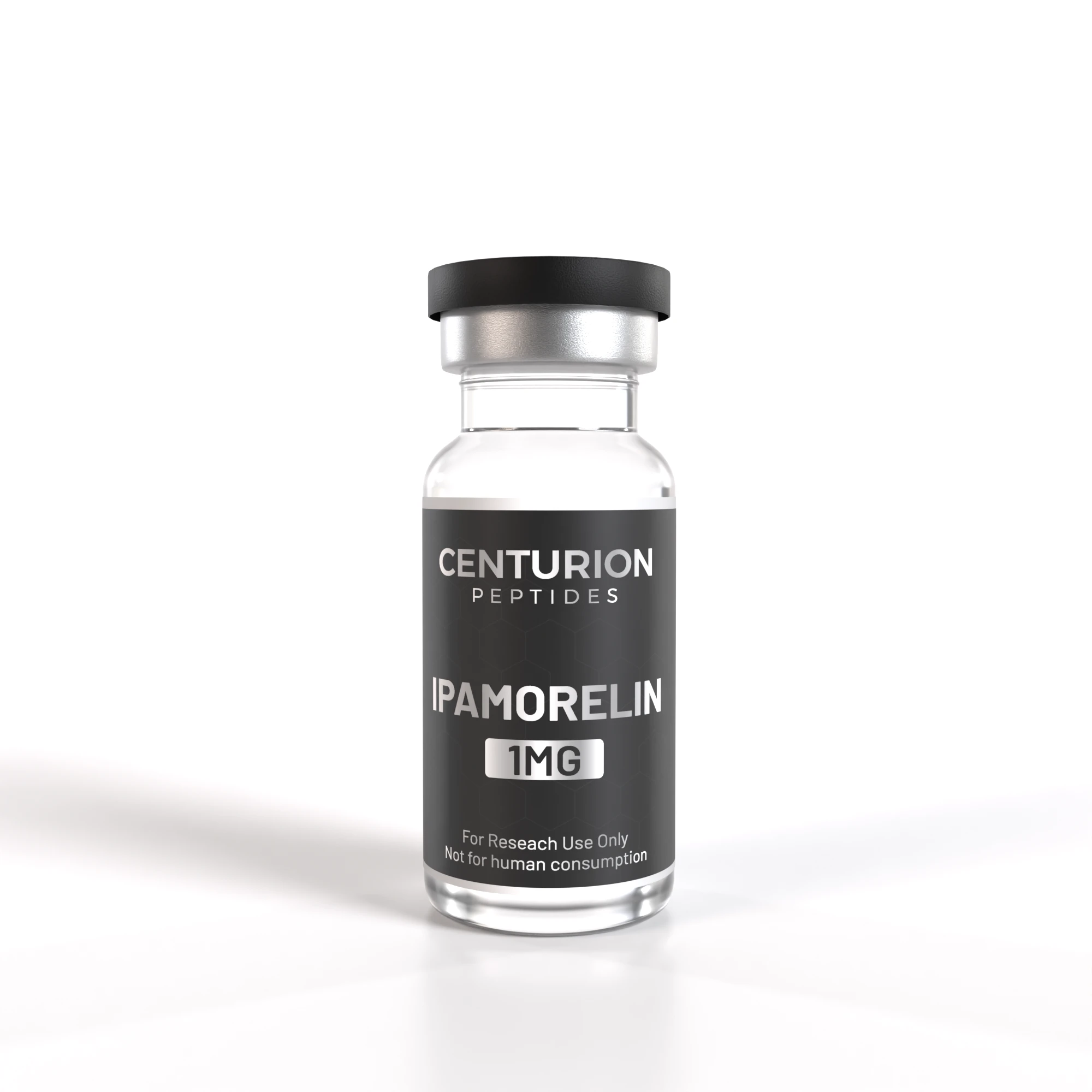
IPAMORELIN 1MG
Categories:
$50.00
FDA Disclaimer: The statements made within this website have not been evaluated by the US Food and Drug Administration. The statements and the products of this company are not intended to diagnose, treat, cure or prevent any disease. All products are for laboratory developmental research USE ONLY.
Guaranteed Safe Checkout
Money Back
Guarantee
SATISFACTION
GUARANTEED
EASY
RETURNS
SECURE
ORDERING
RAPID
SHIPPING
THIRD PARTY
TESTED
Ipamorelin
Ipamorelin is a synthetic pentapeptide belonging to the class of growth hormone secretagogues (GHS). It has been widely studied for its ability to stimulate endogenous growth hormone (GH) secretion through selective activation of the ghrelin receptor (growth hormone secretagogue receptor, GHS-R1a) located in the pituitary and hypothalamus. Ipamorelin is structurally distinct from earlier growth hormone releasing peptides and is characterized by its high specificity for GH release with minimal influence on cortisol, prolactin, or adrenocorticotropic hormone (ACTH) secretion.
Due to its targeted mechanism and favorable safety profile in experimental models, Ipamorelin has become a prominent compound in endocrine research, metabolic regulation studies, tissue regeneration research, and aging-related investigations.
Overview
The primary biological activity of Ipamorelin is the stimulation of pulsatile growth hormone secretion. By binding to GHS-R1a receptors, Ipamorelin activates intracellular signaling cascades that trigger the release of GH from the anterior pituitary gland. Unlike earlier GHRPs, Ipamorelin exhibits minimal interaction with other endocrine pathways, allowing for focused investigation of growth hormone-mediated processes.
Research indicates that elevated endogenous GH levels resulting from Ipamorelin exposure may influence protein synthesis, lipid metabolism, cellular repair, muscle growth, bone density, immune regulation, and mitochondrial function. These broad physiological effects have positioned Ipamorelin as a valuable research tool in studies of aging, metabolic health, musculoskeletal development, and tissue regeneration.
- Selective growth hormone secretagogue with high receptor specificity
- Stimulates endogenous GH release without disrupting cortisol or prolactin levels
- Supports protein synthesis, lipid metabolism, and tissue repair pathways
- Investigated in aging, metabolic, musculoskeletal, and regenerative research
- Favorable endocrine selectivity in experimental models
Specifications
- Amino Acid Sequence: Aib–His–D-2-Nal–D-Phe–Lys–NH2
- Molecular Formula: C38H49N9O5
- Molecular Weight: 711.85 g/mol
- Peptide Length: 5 amino acids (pentapeptide)
- Other Names: NNC 26-0161, Ipamorelin Acetate
Research and Clinical Insights
Growth Hormone Regulation
Ipamorelin stimulates growth hormone release by activating the ghrelin receptor on somatotroph cells in the anterior pituitary. This receptor-mediated action initiates calcium influx and second-messenger signaling that leads to controlled GH secretion. The resulting increase in GH may subsequently elevate insulin-like growth factor 1 (IGF-1) production in peripheral tissues, amplifying anabolic and regenerative signaling.
Metabolic and Lipid Regulation
Growth hormone elevation induced by Ipamorelin has been shown to influence lipid metabolism by promoting lipolysis, reducing adipose tissue accumulation, and enhancing metabolic rate. Research models indicate improved insulin sensitivity and enhanced substrate utilization under Ipamorelin-mediated GH stimulation.
Musculoskeletal and Tissue Regeneration Studies
Ipamorelin-driven GH release contributes to increased protein synthesis, improved nitrogen retention, enhanced collagen production, and accelerated cellular repair. These properties make Ipamorelin valuable in studies involving muscle hypertrophy, connective tissue recovery, bone density maintenance, and wound healing processes.
Aging and Cellular Longevity Research
Declining growth hormone levels are associated with aging-related deterioration of metabolic and structural integrity. Ipamorelin has been investigated as a potential modulator of age-associated physiological decline by restoring GH signaling, improving mitochondrial efficiency, and supporting cellular resilience.
Neurological and Cognitive Implications
Emerging research suggests that GH and IGF-1 signaling influenced by Ipamorelin may play roles in neurogenesis, synaptic plasticity, cognitive performance, and neuroprotection. These effects position Ipamorelin as a compound of interest in neurological and cognitive research frameworks.
Usage Considerations
Ipamorelin is supplied strictly for research and laboratory use. It is not approved for human therapeutic application. All handling, storage, and experimental usage must comply with institutional safety regulations and applicable research guidelines.
Notice: Ipamorelin is offered for research purposes only. Please review and comply with all Terms and Conditions prior to ordering.
Ipamorelin
Ipamorelin is a synthetic pentapeptide belonging to the class of growth hormone secretagogues (GHS). It has been widely studied for its ability to stimulate endogenous growth hormone (GH) secretion through selective activation of the ghrelin receptor (growth hormone secretagogue receptor, GHS-R1a) located in the pituitary and hypothalamus. Ipamorelin is structurally distinct from earlier growth hormone releasing peptides and is characterized by its high specificity for GH release with minimal influence on cortisol, prolactin, or adrenocorticotropic hormone (ACTH) secretion.
Due to its targeted mechanism and favorable safety profile in experimental models, Ipamorelin has become a prominent compound in endocrine research, metabolic regulation studies, tissue regeneration research, and aging-related investigations.
Overview
The primary biological activity of Ipamorelin is the stimulation of pulsatile growth hormone secretion. By binding to GHS-R1a receptors, Ipamorelin activates intracellular signaling cascades that trigger the release of GH from the anterior pituitary gland. Unlike earlier GHRPs, Ipamorelin exhibits minimal interaction with other endocrine pathways, allowing for focused investigation of growth hormone-mediated processes.
Research indicates that elevated endogenous GH levels resulting from Ipamorelin exposure may influence protein synthesis, lipid metabolism, cellular repair, muscle growth, bone density, immune regulation, and mitochondrial function. These broad physiological effects have positioned Ipamorelin as a valuable research tool in studies of aging, metabolic health, musculoskeletal development, and tissue regeneration.
- Selective growth hormone secretagogue with high receptor specificity
- Stimulates endogenous GH release without disrupting cortisol or prolactin levels
- Supports protein synthesis, lipid metabolism, and tissue repair pathways
- Investigated in aging, metabolic, musculoskeletal, and regenerative research
- Favorable endocrine selectivity in experimental models
Specifications
- Amino Acid Sequence: Aib–His–D-2-Nal–D-Phe–Lys–NH2
- Molecular Formula: C38H49N9O5
- Molecular Weight: 711.85 g/mol
- Peptide Length: 5 amino acids (pentapeptide)
- Other Names: NNC 26-0161, Ipamorelin Acetate
Research and Clinical Insights
Growth Hormone Regulation
Ipamorelin stimulates growth hormone release by activating the ghrelin receptor on somatotroph cells in the anterior pituitary. This receptor-mediated action initiates calcium influx and second-messenger signaling that leads to controlled GH secretion. The resulting increase in GH may subsequently elevate insulin-like growth factor 1 (IGF-1) production in peripheral tissues, amplifying anabolic and regenerative signaling.
Metabolic and Lipid Regulation
Growth hormone elevation induced by Ipamorelin has been shown to influence lipid metabolism by promoting lipolysis, reducing adipose tissue accumulation, and enhancing metabolic rate. Research models indicate improved insulin sensitivity and enhanced substrate utilization under Ipamorelin-mediated GH stimulation.
Musculoskeletal and Tissue Regeneration Studies
Ipamorelin-driven GH release contributes to increased protein synthesis, improved nitrogen retention, enhanced collagen production, and accelerated cellular repair. These properties make Ipamorelin valuable in studies involving muscle hypertrophy, connective tissue recovery, bone density maintenance, and wound healing processes.
Aging and Cellular Longevity Research
Declining growth hormone levels are associated with aging-related deterioration of metabolic and structural integrity. Ipamorelin has been investigated as a potential modulator of age-associated physiological decline by restoring GH signaling, improving mitochondrial efficiency, and supporting cellular resilience.
Neurological and Cognitive Implications
Emerging research suggests that GH and IGF-1 signaling influenced by Ipamorelin may play roles in neurogenesis, synaptic plasticity, cognitive performance, and neuroprotection. These effects position Ipamorelin as a compound of interest in neurological and cognitive research frameworks.
Usage Considerations
Ipamorelin is supplied strictly for research and laboratory use. It is not approved for human therapeutic application. All handling, storage, and experimental usage must comply with institutional safety regulations and applicable research guidelines.
Notice: Ipamorelin is offered for research purposes only. Please review and comply with all Terms and Conditions prior to ordering.
Related Products
-
CARGRILINTIDE
Peptides $20.00 – $40.00Price range: $20.00 through $40.00 This product has multiple variants. The options may be chosen on the product page
Reviews
There are no reviews yet.