
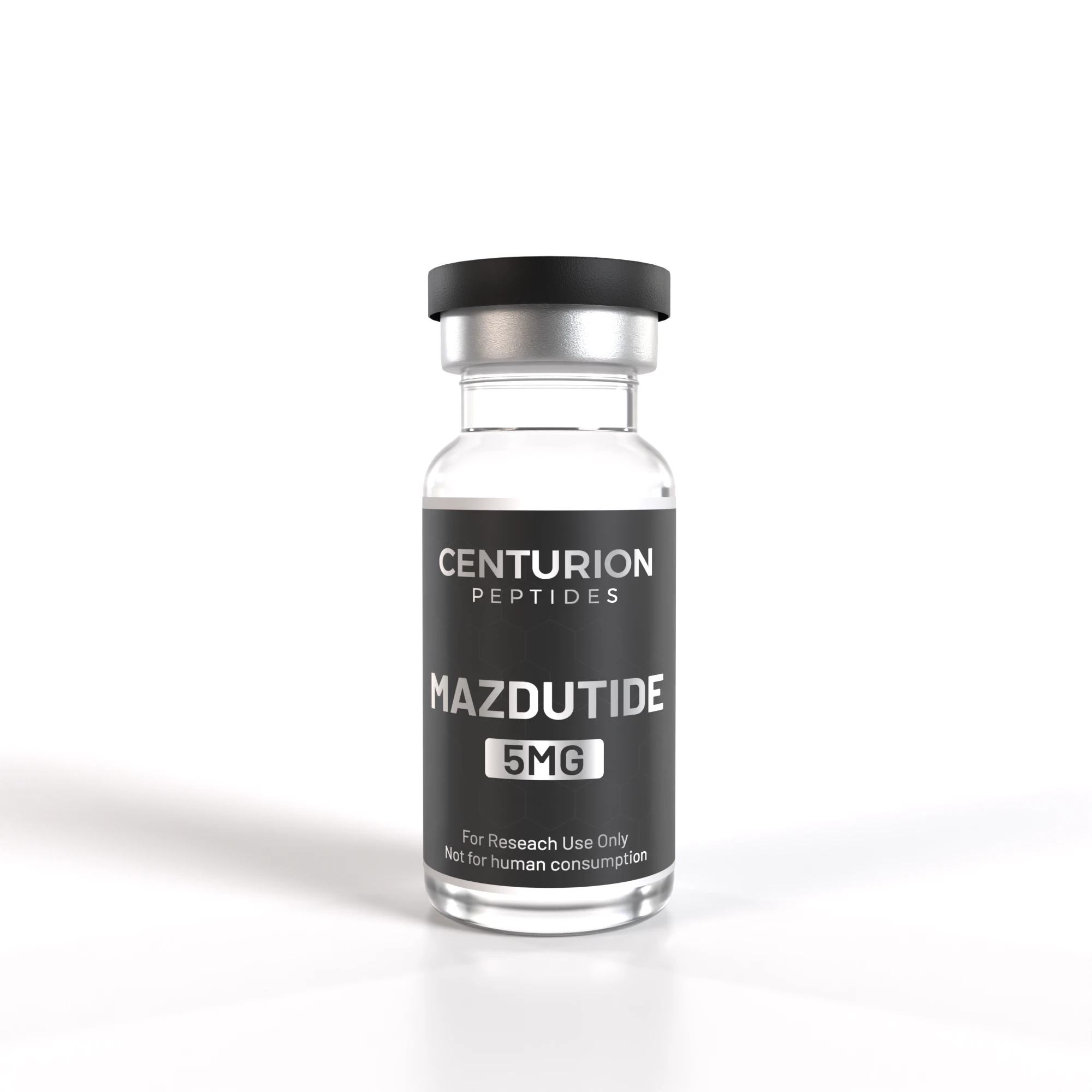
MAZDUTIDE 5MG
Categories:
$50.00
FDA Disclaimer: The statements made within this website have not been evaluated by the US Food and Drug Administration. The statements and the products of this company are not intended to diagnose, treat, cure or prevent any disease. All products are for laboratory developmental research USE ONLY.
Guaranteed Safe Checkout
Money Back
Guarantee
SATISFACTION
GUARANTEED
EASY
RETURNS
SECURE
ORDERING
RAPID
SHIPPING
THIRD PARTY
TESTED
Mazdutide
Mazdutide is a synthetic peptide and a glucagon-like peptide-1 (GLP-1) receptor agonist designed for research into metabolic disorders, including obesity and type 2 diabetes. As a GLP-1 analog, Mazdutide mimics the action of the naturally occurring GLP-1 hormone, which regulates glucose metabolism, insulin secretion, and appetite signaling.
Overview
GLP-1 peptides, including Mazdutide, are involved in maintaining glucose homeostasis and energy balance. Mazdutide binds to GLP-1 receptors on pancreatic beta cells, stimulating glucose-dependent insulin secretion while inhibiting glucagon release. Additionally, it acts on the central nervous system to reduce appetite and food intake, making it a key research tool in metabolic and obesity studies.
- GLP-1 receptor agonist with potential in metabolic regulation
- May enhance insulin secretion in response to glucose
- May suppress glucagon release and reduce hepatic glucose output
- Acts centrally to modulate appetite and food intake
- Studied for obesity, type 2 diabetes, and metabolic syndrome
Specifications
- Peptide Type: GLP-1 receptor agonist analog
- Peptide Length: Research-specific analog sequence
- Molecular Formula: Proprietary sequence (varies by synthesis)
- Molecular Weight: Dependent on synthesis batch
- Other Names: Mazdutide, GLP-1 analog peptide
Research and Clinical Insights
Glucose Homeostasis and Insulin Secretion
Mazdutide has been studied for its effects on pancreatic beta cells, where it stimulates glucose-dependent insulin secretion. Preclinical studies indicate that it helps regulate blood glucose levels by enhancing insulin release during hyperglycemia while minimizing the risk of hypoglycemia. This makes it a valuable peptide for research in diabetes management.
Glucagon Regulation
The peptide also suppresses glucagon secretion from pancreatic alpha cells, reducing hepatic glucose output. This effect contributes to overall glycemic control and is a key mechanism by which GLP-1 analogs, including Mazdutide, are studied in type 2 diabetes models.
Appetite Suppression and Weight Management
Mazdutide acts on GLP-1 receptors in the hypothalamus to reduce appetite and caloric intake. Preclinical studies in rodent models have demonstrated reductions in food consumption and body weight following peptide administration. This effect has led to investigation into Mazdutide’s potential as a therapeutic agent for obesity and metabolic syndrome.
Cardiometabolic Effects
Research suggests that GLP-1 receptor agonists like Mazdutide may exert additional cardiovascular benefits, including improved lipid profiles, reduced inflammation, and better endothelial function. These effects are being investigated in experimental models to understand the potential broader impact of GLP-1 analogs beyond glycemic control.
Mechanism of Action
Mazdutide binds to the GLP-1 receptor, a G protein-coupled receptor, activating intracellular signaling cascades including cAMP production and PKA activation. These pathways enhance insulin secretion, suppress glucagon, slow gastric emptying, and modulate appetite centers in the brain. The combination of peripheral and central actions underpins its potential utility in metabolic research.
Usage Considerations
Mazdutide is intended strictly for laboratory and research purposes. It is not approved for therapeutic or clinical use outside controlled research studies. Proper laboratory handling, storage, and safety protocols should be strictly followed when using this peptide. Research protocols should adhere to institutional and regulatory guidelines for peptides acting on metabolic and endocrine systems.
Note: Mazdutide peptide is available for research purposes only. Please review and adhere to all applicable Terms and Conditions before ordering.
Mazdutide
Mazdutide is a synthetic peptide and a glucagon-like peptide-1 (GLP-1) receptor agonist designed for research into metabolic disorders, including obesity and type 2 diabetes. As a GLP-1 analog, Mazdutide mimics the action of the naturally occurring GLP-1 hormone, which regulates glucose metabolism, insulin secretion, and appetite signaling.
Overview
GLP-1 peptides, including Mazdutide, are involved in maintaining glucose homeostasis and energy balance. Mazdutide binds to GLP-1 receptors on pancreatic beta cells, stimulating glucose-dependent insulin secretion while inhibiting glucagon release. Additionally, it acts on the central nervous system to reduce appetite and food intake, making it a key research tool in metabolic and obesity studies.
- GLP-1 receptor agonist with potential in metabolic regulation
- May enhance insulin secretion in response to glucose
- May suppress glucagon release and reduce hepatic glucose output
- Acts centrally to modulate appetite and food intake
- Studied for obesity, type 2 diabetes, and metabolic syndrome
Specifications
- Peptide Type: GLP-1 receptor agonist analog
- Peptide Length: Research-specific analog sequence
- Molecular Formula: Proprietary sequence (varies by synthesis)
- Molecular Weight: Dependent on synthesis batch
- Other Names: Mazdutide, GLP-1 analog peptide
Research and Clinical Insights
Glucose Homeostasis and Insulin Secretion
Mazdutide has been studied for its effects on pancreatic beta cells, where it stimulates glucose-dependent insulin secretion. Preclinical studies indicate that it helps regulate blood glucose levels by enhancing insulin release during hyperglycemia while minimizing the risk of hypoglycemia. This makes it a valuable peptide for research in diabetes management.
Glucagon Regulation
The peptide also suppresses glucagon secretion from pancreatic alpha cells, reducing hepatic glucose output. This effect contributes to overall glycemic control and is a key mechanism by which GLP-1 analogs, including Mazdutide, are studied in type 2 diabetes models.
Appetite Suppression and Weight Management
Mazdutide acts on GLP-1 receptors in the hypothalamus to reduce appetite and caloric intake. Preclinical studies in rodent models have demonstrated reductions in food consumption and body weight following peptide administration. This effect has led to investigation into Mazdutide’s potential as a therapeutic agent for obesity and metabolic syndrome.
Cardiometabolic Effects
Research suggests that GLP-1 receptor agonists like Mazdutide may exert additional cardiovascular benefits, including improved lipid profiles, reduced inflammation, and better endothelial function. These effects are being investigated in experimental models to understand the potential broader impact of GLP-1 analogs beyond glycemic control.
Mechanism of Action
Mazdutide binds to the GLP-1 receptor, a G protein-coupled receptor, activating intracellular signaling cascades including cAMP production and PKA activation. These pathways enhance insulin secretion, suppress glucagon, slow gastric emptying, and modulate appetite centers in the brain. The combination of peripheral and central actions underpins its potential utility in metabolic research.
Usage Considerations
Mazdutide is intended strictly for laboratory and research purposes. It is not approved for therapeutic or clinical use outside controlled research studies. Proper laboratory handling, storage, and safety protocols should be strictly followed when using this peptide. Research protocols should adhere to institutional and regulatory guidelines for peptides acting on metabolic and endocrine systems.
Note: Mazdutide peptide is available for research purposes only. Please review and adhere to all applicable Terms and Conditions before ordering.
Related Products
-
CARGRILINTIDE
Peptides $20.00 – $40.00Price range: $20.00 through $40.00 This product has multiple variants. The options may be chosen on the product page




Reviews
There are no reviews yet.