
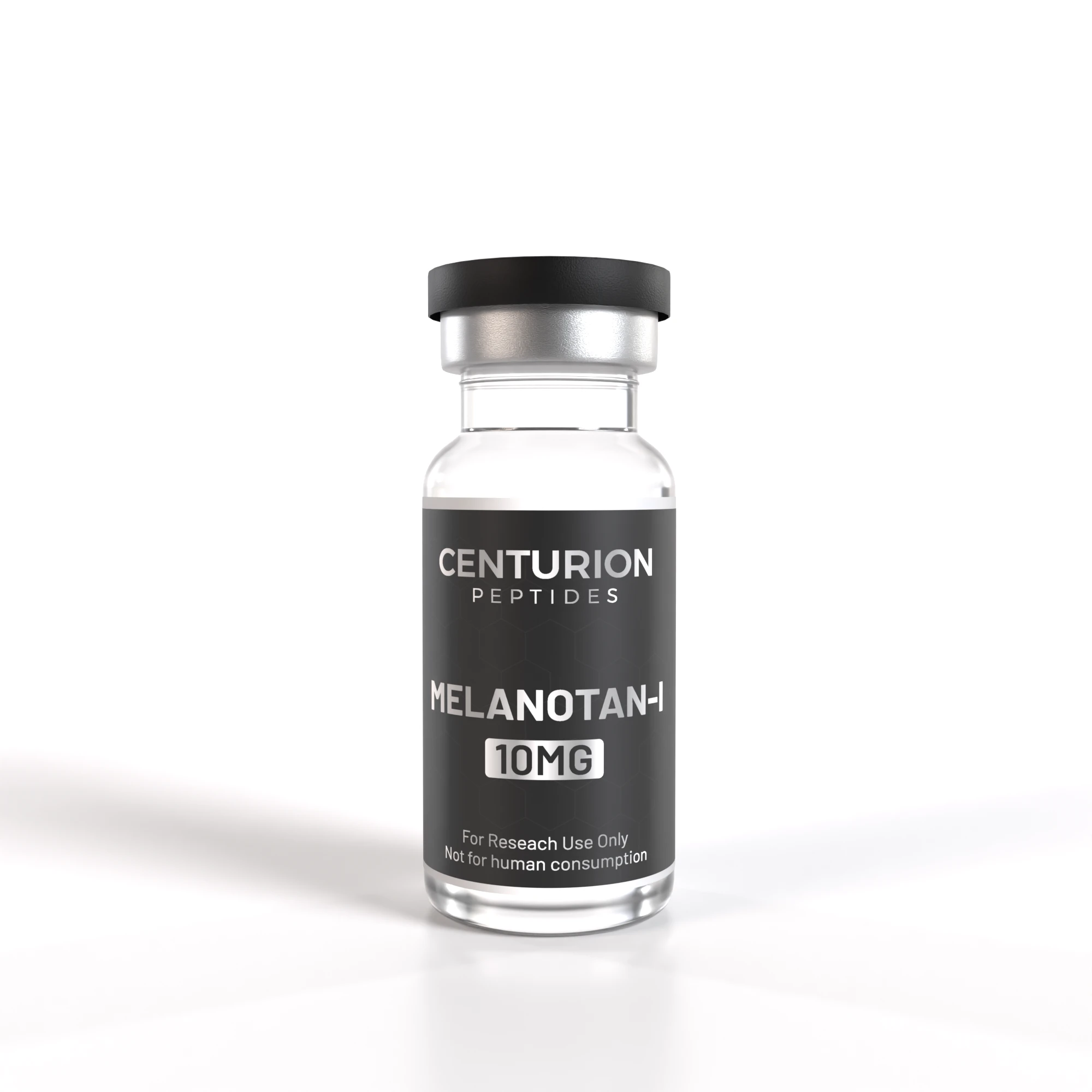
MELANOTAN-I 10MG
Categories:
$50.00
FDA Disclaimer: The statements made within this website have not been evaluated by the US Food and Drug Administration. The statements and the products of this company are not intended to diagnose, treat, cure or prevent any disease. All products are for laboratory developmental research USE ONLY.
Guaranteed Safe Checkout
Money Back
Guarantee
SATISFACTION
GUARANTEED
EASY
RETURNS
SECURE
ORDERING
RAPID
SHIPPING
THIRD PARTY
TESTED
Melanotan I
Melanotan I, also known as Afamelanotide, is a synthetic analog of the naturally occurring α-melanocyte-stimulating hormone (α-MSH). It has been extensively studied for its ability to stimulate melanogenesis, enhance skin pigmentation, and provide potential photoprotective effects. Unlike Melanotan II, Melanotan I primarily focuses on skin pigmentation with minimal influence on sexual function.
Overview
Melanotan I is a linear peptide that acts on melanocortin receptors, particularly MC1R, which regulates melanin production in melanocytes. By increasing melanin synthesis, Melanotan I may provide a natural tanning effect while potentially protecting skin against ultraviolet (UV) radiation-induced damage. It has also been explored for its potential to reduce the risk of sunburn and photodamage.
- Stimulates melanin production for enhanced skin pigmentation
- May provide photoprotective effects against UV radiation
- Primarily targets MC1R melanocortin receptors in melanocytes
- Studied in research for skin disorders, pigmentation enhancement, and photoprotection
Specifications
- Peptide Length: 13 amino acids
- Molecular Formula: C59H88N18O13
- Molecular Weight: 1600.86 g/mol
- Other Names: Afamelanotide, MT-1, Melanotan I analog
Research and Clinical Insights
Skin Pigmentation and Tanning
Melanotan I binds to MC1R receptors on melanocytes, stimulating melanin synthesis and leading to darker skin pigmentation. Research suggests it may produce a more even tan compared to natural UV-induced tanning, potentially reducing the risk of sunburn. It has been investigated for use in conditions such as erythropoietic protoporphyria, a disorder characterized by photosensitivity.
Photoprotection and UV Defense
Studies indicate that increased melanin production from Melanotan I may provide photoprotective benefits. By absorbing UV radiation, melanin reduces DNA damage in skin cells and may help prevent sunburn and photoaging. Preclinical and clinical research supports its potential as a protective agent against UV-induced oxidative stress.
Mechanism of Action
Melanotan I exerts its effects through activation of MC1R receptors, leading to increased cyclic AMP (cAMP) signaling within melanocytes. This triggers the enzymatic cascade responsible for melanin production, enhancing pigmentation and potentially improving skin resilience to UV exposure.
Safety and Usage Considerations
Melanotan I is intended strictly for research and laboratory purposes. It is not approved for general therapeutic use outside of controlled studies. Reported side effects in research settings include mild nausea, flushing, and transient headache. Proper handling, storage, and laboratory safety protocols should be strictly followed when using this peptide.
Note: Melanotan I (Afamelanotide) peptide is available for research purposes only. Please review and adhere to all applicable Terms and Conditions before ordering.
Melanotan I
Melanotan I, also known as Afamelanotide, is a synthetic analog of the naturally occurring α-melanocyte-stimulating hormone (α-MSH). It has been extensively studied for its ability to stimulate melanogenesis, enhance skin pigmentation, and provide potential photoprotective effects. Unlike Melanotan II, Melanotan I primarily focuses on skin pigmentation with minimal influence on sexual function.
Overview
Melanotan I is a linear peptide that acts on melanocortin receptors, particularly MC1R, which regulates melanin production in melanocytes. By increasing melanin synthesis, Melanotan I may provide a natural tanning effect while potentially protecting skin against ultraviolet (UV) radiation-induced damage. It has also been explored for its potential to reduce the risk of sunburn and photodamage.
- Stimulates melanin production for enhanced skin pigmentation
- May provide photoprotective effects against UV radiation
- Primarily targets MC1R melanocortin receptors in melanocytes
- Studied in research for skin disorders, pigmentation enhancement, and photoprotection
Specifications
- Peptide Length: 13 amino acids
- Molecular Formula: C59H88N18O13
- Molecular Weight: 1600.86 g/mol
- Other Names: Afamelanotide, MT-1, Melanotan I analog
Research and Clinical Insights
Skin Pigmentation and Tanning
Melanotan I binds to MC1R receptors on melanocytes, stimulating melanin synthesis and leading to darker skin pigmentation. Research suggests it may produce a more even tan compared to natural UV-induced tanning, potentially reducing the risk of sunburn. It has been investigated for use in conditions such as erythropoietic protoporphyria, a disorder characterized by photosensitivity.
Photoprotection and UV Defense
Studies indicate that increased melanin production from Melanotan I may provide photoprotective benefits. By absorbing UV radiation, melanin reduces DNA damage in skin cells and may help prevent sunburn and photoaging. Preclinical and clinical research supports its potential as a protective agent against UV-induced oxidative stress.
Mechanism of Action
Melanotan I exerts its effects through activation of MC1R receptors, leading to increased cyclic AMP (cAMP) signaling within melanocytes. This triggers the enzymatic cascade responsible for melanin production, enhancing pigmentation and potentially improving skin resilience to UV exposure.
Safety and Usage Considerations
Melanotan I is intended strictly for research and laboratory purposes. It is not approved for general therapeutic use outside of controlled studies. Reported side effects in research settings include mild nausea, flushing, and transient headache. Proper handling, storage, and laboratory safety protocols should be strictly followed when using this peptide.
Note: Melanotan I (Afamelanotide) peptide is available for research purposes only. Please review and adhere to all applicable Terms and Conditions before ordering.
Related Products
-
CARGRILINTIDE
Peptides $20.00 – $40.00Price range: $20.00 through $40.00 This product has multiple variants. The options may be chosen on the product page
Reviews
There are no reviews yet.