
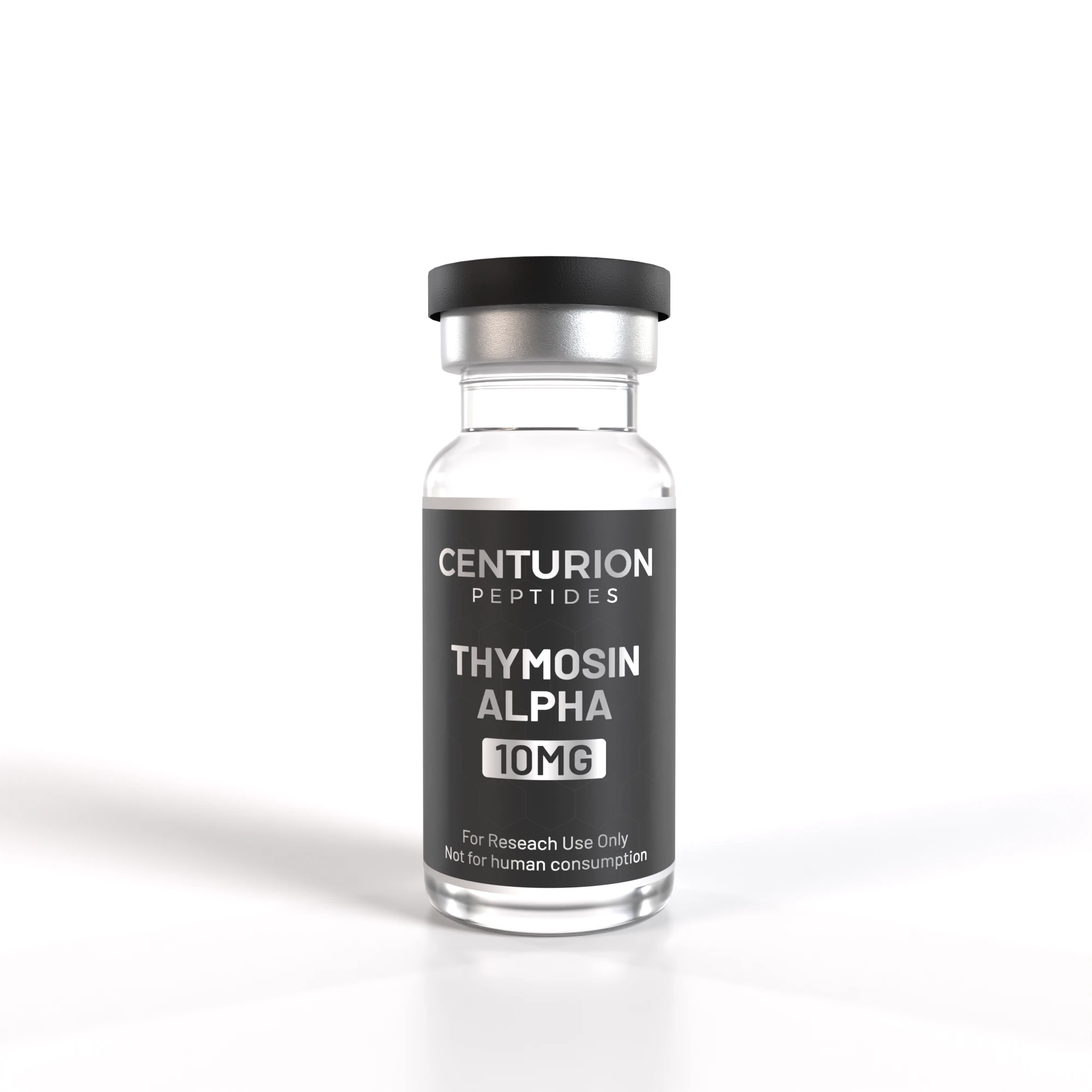
THYMOSIN ALPHA 10MG
Categories:
$50.00
FDA Disclaimer: The statements made within this website have not been evaluated by the US Food and Drug Administration. The statements and the products of this company are not intended to diagnose, treat, cure or prevent any disease. All products are for laboratory developmental research USE ONLY.
Guaranteed Safe Checkout
Money Back
Guarantee
SATISFACTION
GUARANTEED
EASY
RETURNS
SECURE
ORDERING
RAPID
SHIPPING
THIRD PARTY
TESTED
Thymosin Alpha Peptide
Thymosin Alpha, also known as Thymosin Alpha-1, TA1, or Tα1, is a peptide fragment derived from a naturally occurring protein that has been extensively studied for its potential effects on the immune system. Research suggests that it may support T-cell production, potentially assisting in the body’s defense against infections and immune-related conditions.
Overview
Thymosin Alpha is a naturally occurring polypeptide found in Thymosin Fraction 5, a thymus gland extract. The synthetic form, known as Thymalfasin, is composed of 28 amino acids and is derived from the longer precursor protein Prothymosin Alpha (113 amino acids). The peptide has been studied for its immunomodulatory potential, including:
- Enhancing activity of natural killer (NK) cells
- Stimulating expression of phenotypic markers on T-cells
- Increasing high-affinity receptors for interleukin-2, promoting T-cell activation and proliferation
- Supporting differentiation of T-helper and cytotoxic T-cell populations
Specifications
- Molecular Formula: C129H215N33O55
- Molecular Weight: 3108.31 g/mol
- Other Names: TA1, Tα1, Thymalfasin
Research and Clinical Studies
Immune System Support
Studies indicate that Thymosin Alpha may modulate immune responses by stimulating NK cell activity and promoting T-cell differentiation. Some clinical trials reported enhanced immune markers in subjects, although responses can vary among individuals.
Hepatitis and Liver Health
Clinical trials have investigated Thymosin Alpha-1 in patients with Hepatitis B and C. In combination with standard treatments like interferon-alpha, Tα1 has been associated with improved virological response rates and enhanced immune function through engagement with toll-like receptors and cytokine modulation.
Sepsis
Meta-analyses of clinical studies suggest that Tα1 may reduce mortality in sepsis by modulating the immune system during different phases of the condition. The peptide’s effects are complex and may depend on timing and disease stage.
HIV Research
Phase II clinical trials in HIV patients on antiretroviral therapy indicated that Thymosin Alpha-1 may increase thymic output and sjTREC levels, potentially supporting immune reconstitution, though overall T-cell counts were largely unchanged over short study periods.
Cancer Studies
Research on cancer cell lines, including liver carcinoma (HepG2) and lung cancer (A549), suggests that Thymosin Alpha may influence oxidative stress, antioxidant enzyme activity, cell proliferation, and migration. The peptide has shown potential anti-proliferative and antioxidant-modulating effects in laboratory studies.
Note: Thymosin Alpha peptide is intended for research and laboratory use only. Please review and adhere to our Terms and Conditions before ordering.
Thymosin Alpha Peptide
Thymosin Alpha, also known as Thymosin Alpha-1, TA1, or Tα1, is a peptide fragment derived from a naturally occurring protein that has been extensively studied for its potential effects on the immune system. Research suggests that it may support T-cell production, potentially assisting in the body’s defense against infections and immune-related conditions.
Overview
Thymosin Alpha is a naturally occurring polypeptide found in Thymosin Fraction 5, a thymus gland extract. The synthetic form, known as Thymalfasin, is composed of 28 amino acids and is derived from the longer precursor protein Prothymosin Alpha (113 amino acids). The peptide has been studied for its immunomodulatory potential, including:
- Enhancing activity of natural killer (NK) cells
- Stimulating expression of phenotypic markers on T-cells
- Increasing high-affinity receptors for interleukin-2, promoting T-cell activation and proliferation
- Supporting differentiation of T-helper and cytotoxic T-cell populations
Specifications
- Molecular Formula: C129H215N33O55
- Molecular Weight: 3108.31 g/mol
- Other Names: TA1, Tα1, Thymalfasin
Research and Clinical Studies
Immune System Support
Studies indicate that Thymosin Alpha may modulate immune responses by stimulating NK cell activity and promoting T-cell differentiation. Some clinical trials reported enhanced immune markers in subjects, although responses can vary among individuals.
Hepatitis and Liver Health
Clinical trials have investigated Thymosin Alpha-1 in patients with Hepatitis B and C. In combination with standard treatments like interferon-alpha, Tα1 has been associated with improved virological response rates and enhanced immune function through engagement with toll-like receptors and cytokine modulation.
Sepsis
Meta-analyses of clinical studies suggest that Tα1 may reduce mortality in sepsis by modulating the immune system during different phases of the condition. The peptide’s effects are complex and may depend on timing and disease stage.
HIV Research
Phase II clinical trials in HIV patients on antiretroviral therapy indicated that Thymosin Alpha-1 may increase thymic output and sjTREC levels, potentially supporting immune reconstitution, though overall T-cell counts were largely unchanged over short study periods.
Cancer Studies
Research on cancer cell lines, including liver carcinoma (HepG2) and lung cancer (A549), suggests that Thymosin Alpha may influence oxidative stress, antioxidant enzyme activity, cell proliferation, and migration. The peptide has shown potential anti-proliferative and antioxidant-modulating effects in laboratory studies.
Note: Thymosin Alpha peptide is intended for research and laboratory use only. Please review and adhere to our Terms and Conditions before ordering.
Related Products
-
CARGRILINTIDE
Peptides $20.00 – $40.00Price range: $20.00 through $40.00 This product has multiple variants. The options may be chosen on the product page
Reviews
There are no reviews yet.